The serpent king
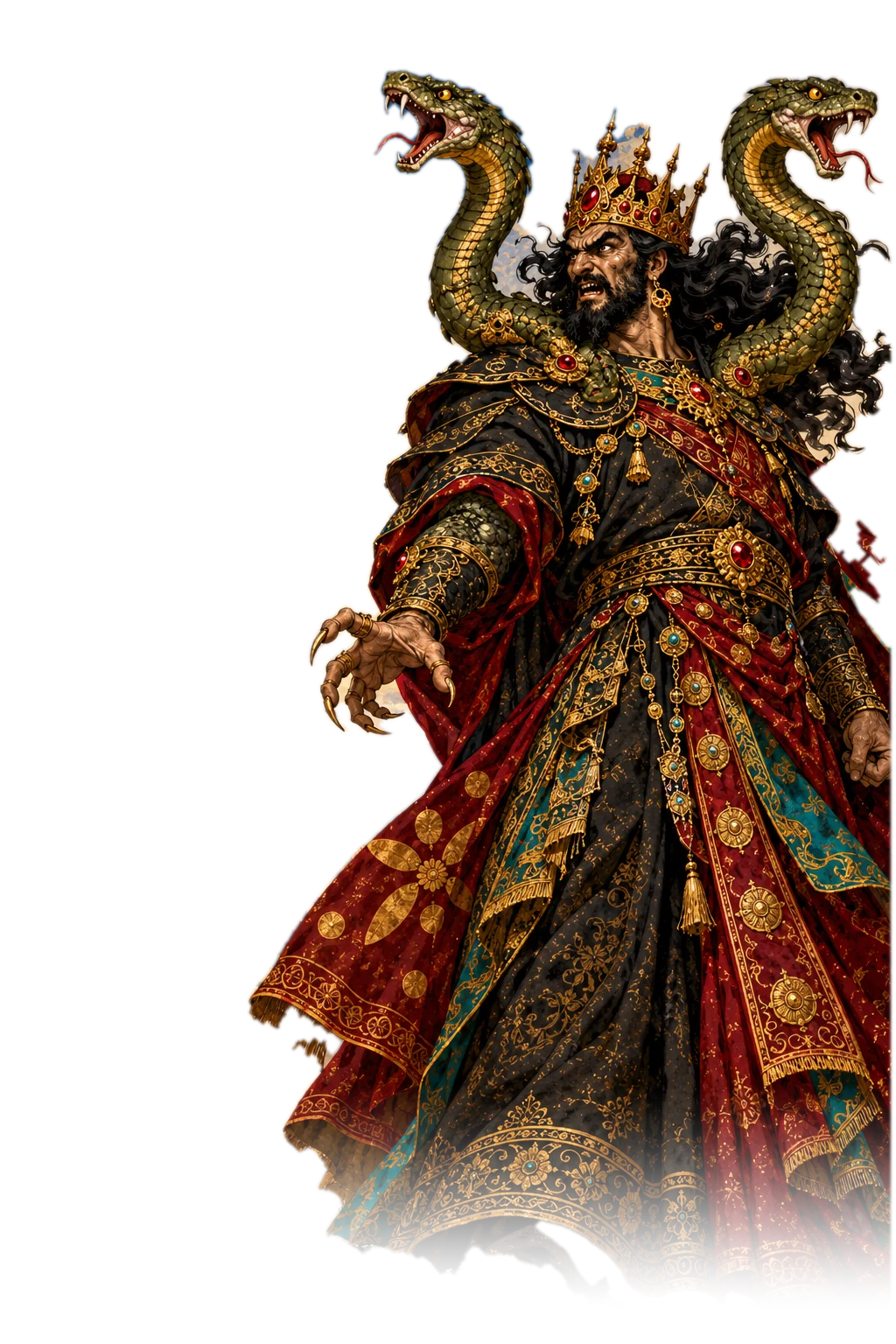
Long ago, Iran was ruled by Zahhak. He had not always been a monster. Ahriman, the spirit of darkness, came to him in disguise, first as a trusted adviser and then as a cook, who fed the young king dishes richer than any he had known. When the king asked how he could repay him, the cook asked for one small thing: to kiss the king's shoulders.
Where his lips touched, two black serpents grew.
They could not be cut away. Each time they were severed, they grew back. Ahriman returned once more, now dressed as a physician, and told the king there was only one way to quiet them: feed them the brains of young men, every day.
So it was done. Zahhak took the throne of Iran and held it, the Shahnameh says, for a thousand years. Each morning two young men were taken from their homes, and they did not come back.
 II
IIThe blacksmith
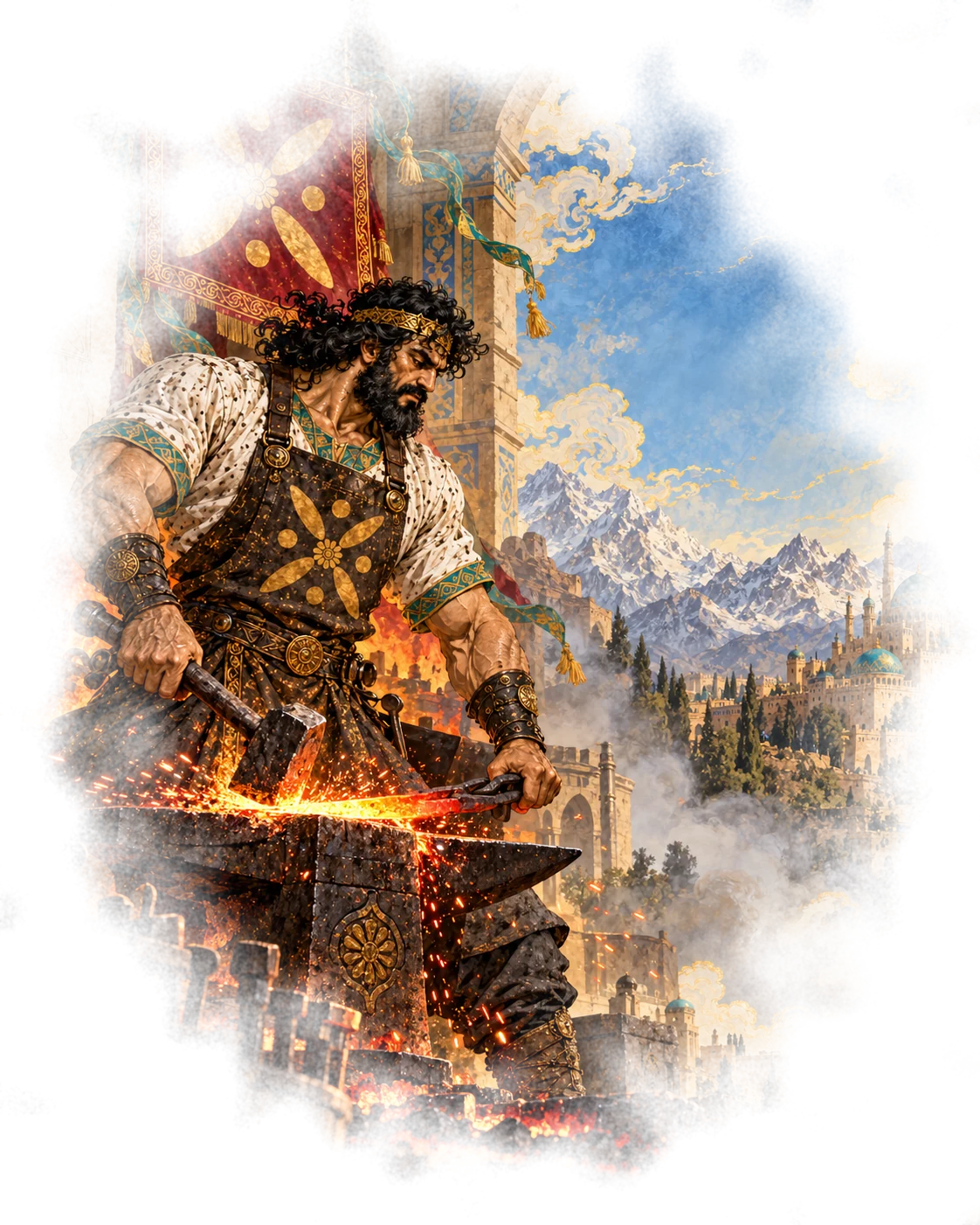
Kaveh was a blacksmith. He worked iron from dawn, with a leather apron tied at his waist to keep the sparks from his skin. He was not a lord or a soldier. He was a father, and he had eighteen sons.
The work was hard and honest. All day the hammer rose and fell, the forge roared, and the old leather apron took the burns that would otherwise have been his. His sons grew up in that heat, and one by one they grew old enough to be noticed.
Every morning the king's men walked the streets, and the whole city held its breath. Every evening there were fewer young men at the forges, in the fields and in the markets.
One by one, they came for Kaveh's sons, until seventeen were gone. When they came for the last, Kaveh put down his hammer and walked to the palace.
IIIThe declaration
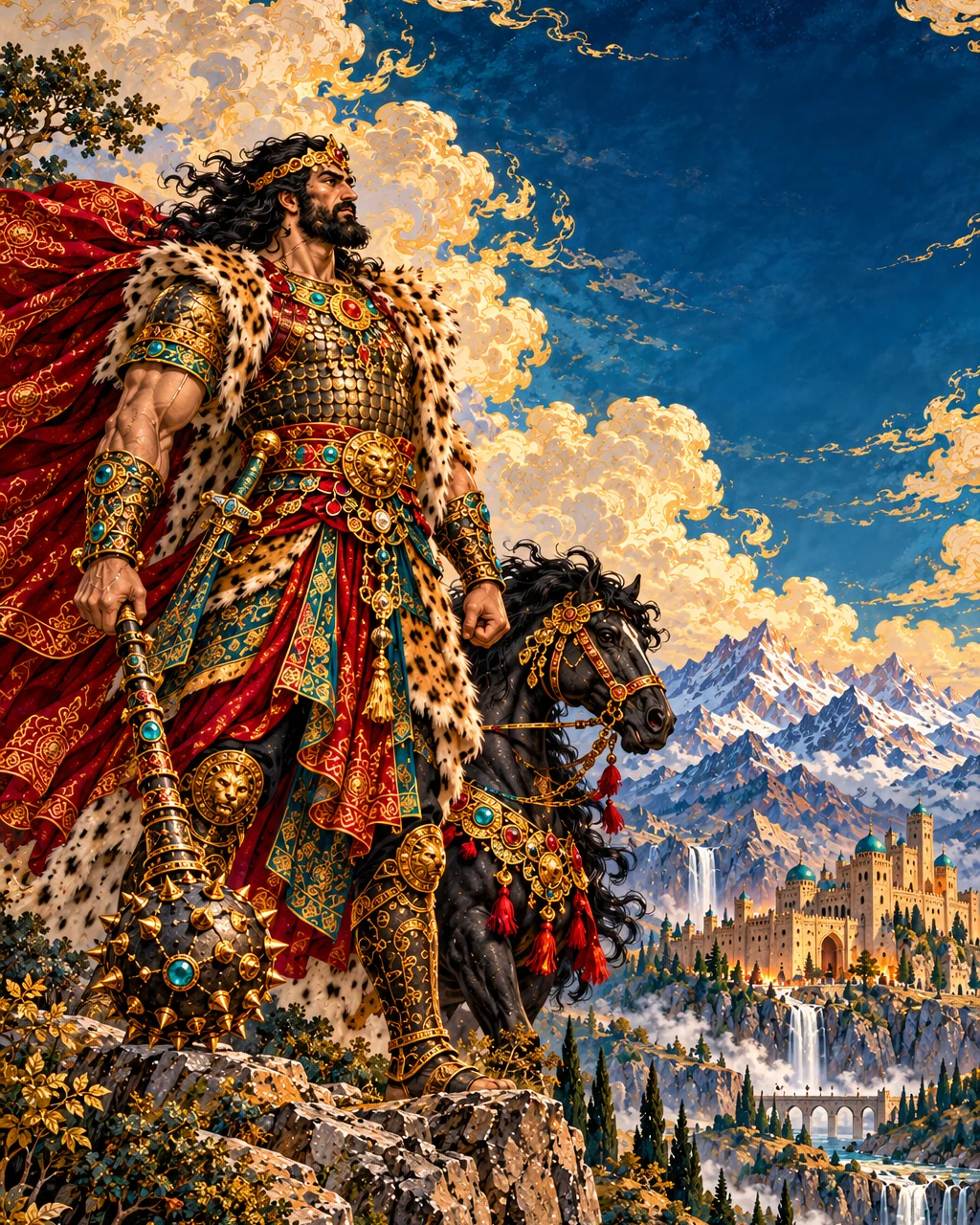
That season, Zahhak was afraid. He had dreamed of a young warrior who struck him down with a mace shaped like the head of an ox, and his wise men had given the warrior a name: Fereydun, a boy not yet grown, hidden somewhere in the mountains.
To steady his throne, the king called the great men of the land together and asked them to sign a declaration. It said that Zahhak was a just king, who had sown nothing but good. Afraid for their lives, they signed.
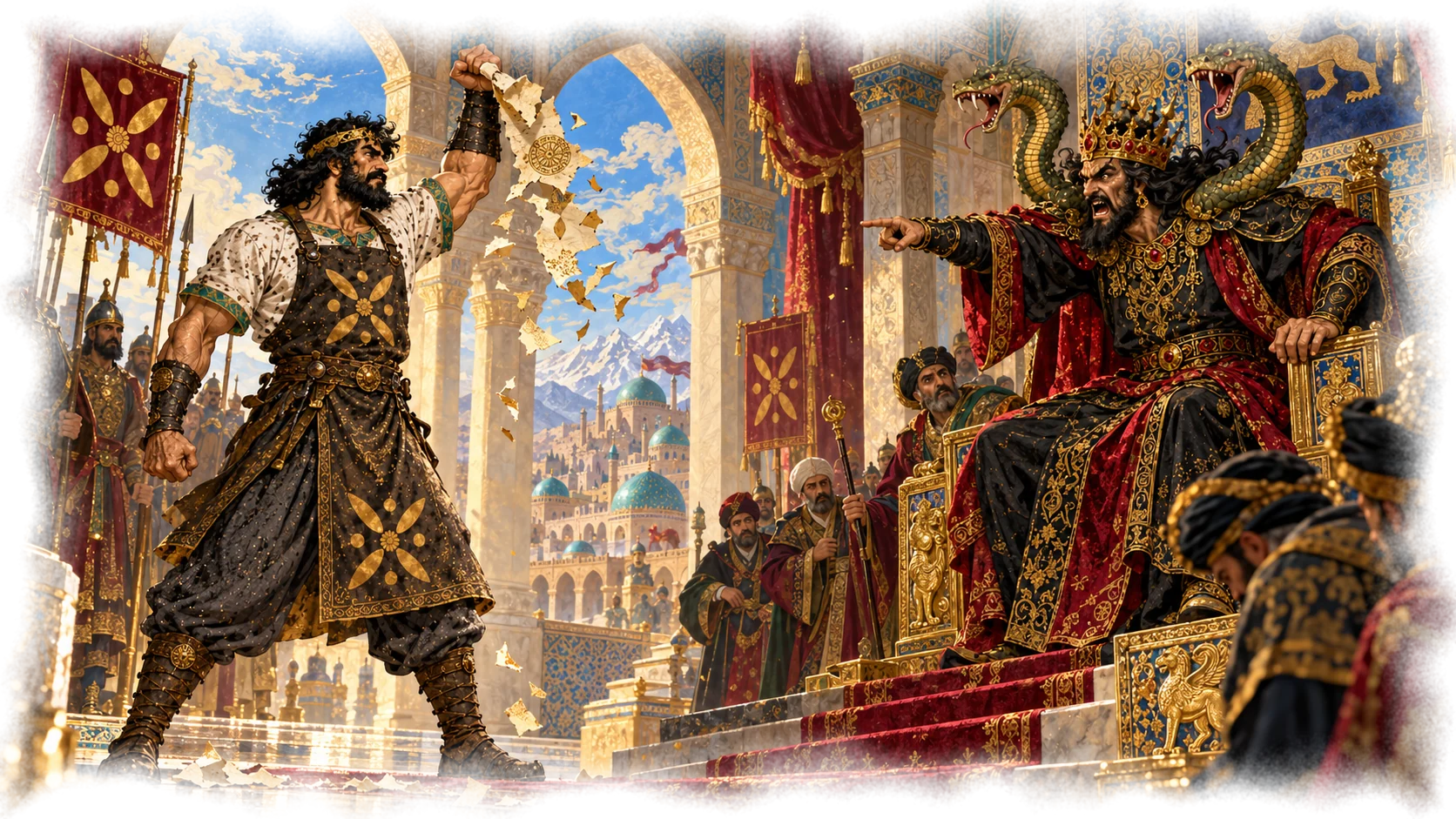
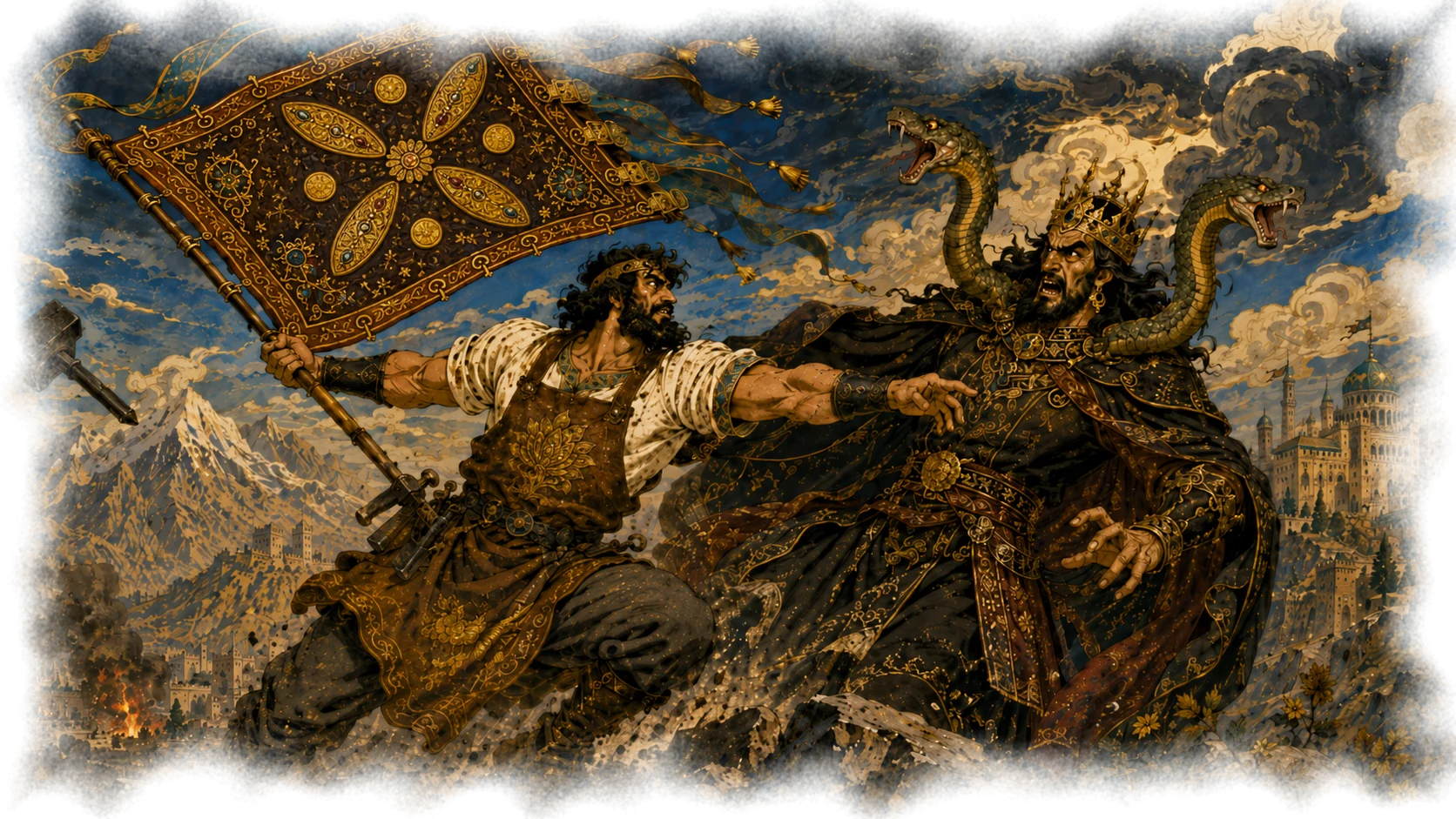
Into that court came Kaveh, crying out for justice. Wishing to seem merciful in front of his nobles, Zahhak ordered the blacksmith's last son set free. Then he held out the declaration for Kaveh to sign.
Kaveh read it to the end. Then he tore it apart.
In front of the whole court he turned on the nobles who had signed it, and told them they had given their hearts to a demon. He walked out of the palace with his son, and no one dared to stop him.
Afterwards, the nobles asked the king why he had let a blacksmith shame him. Zahhak said that when Kaveh cried out, it was as if a mountain of iron had risen between them.
IVThe apron
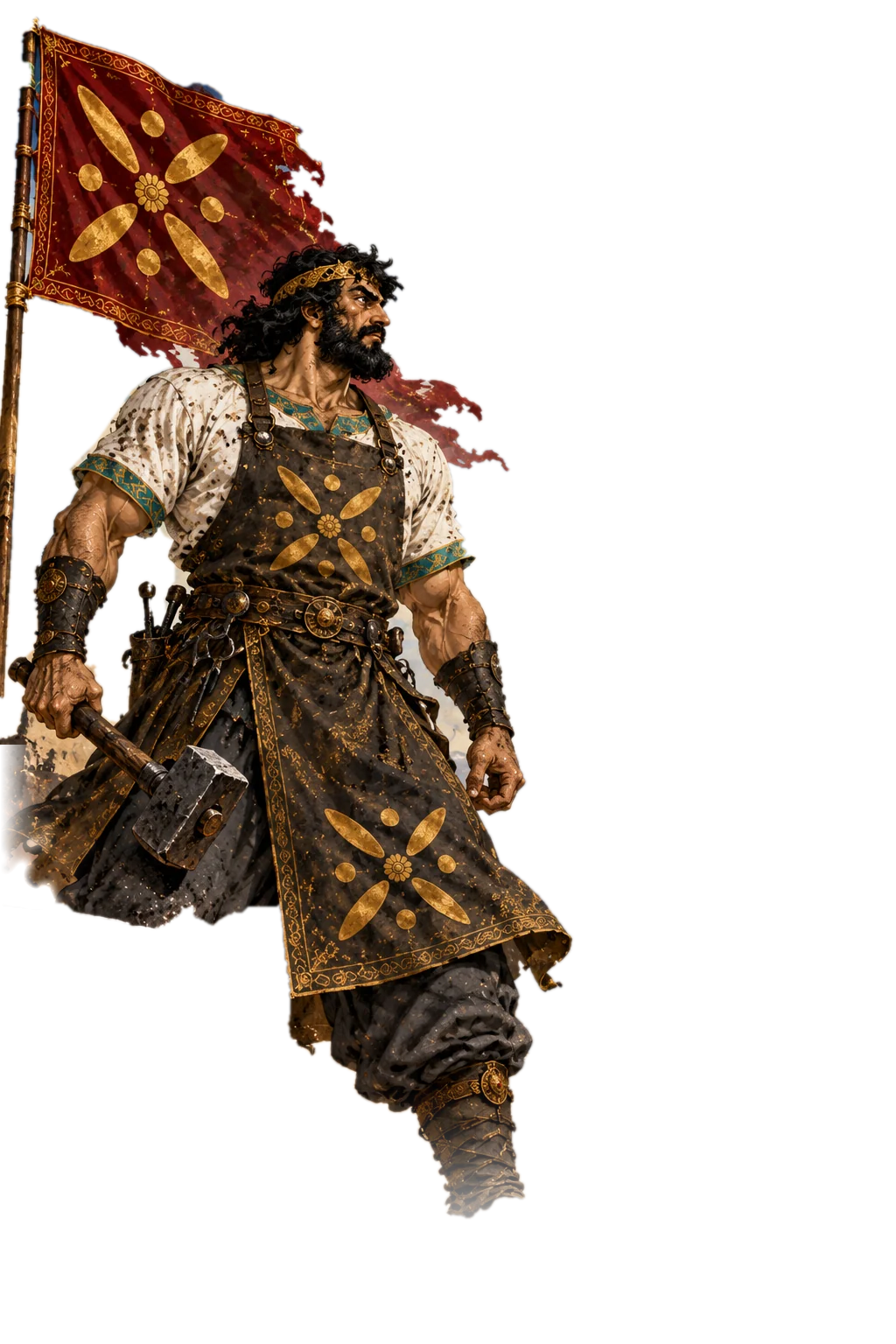
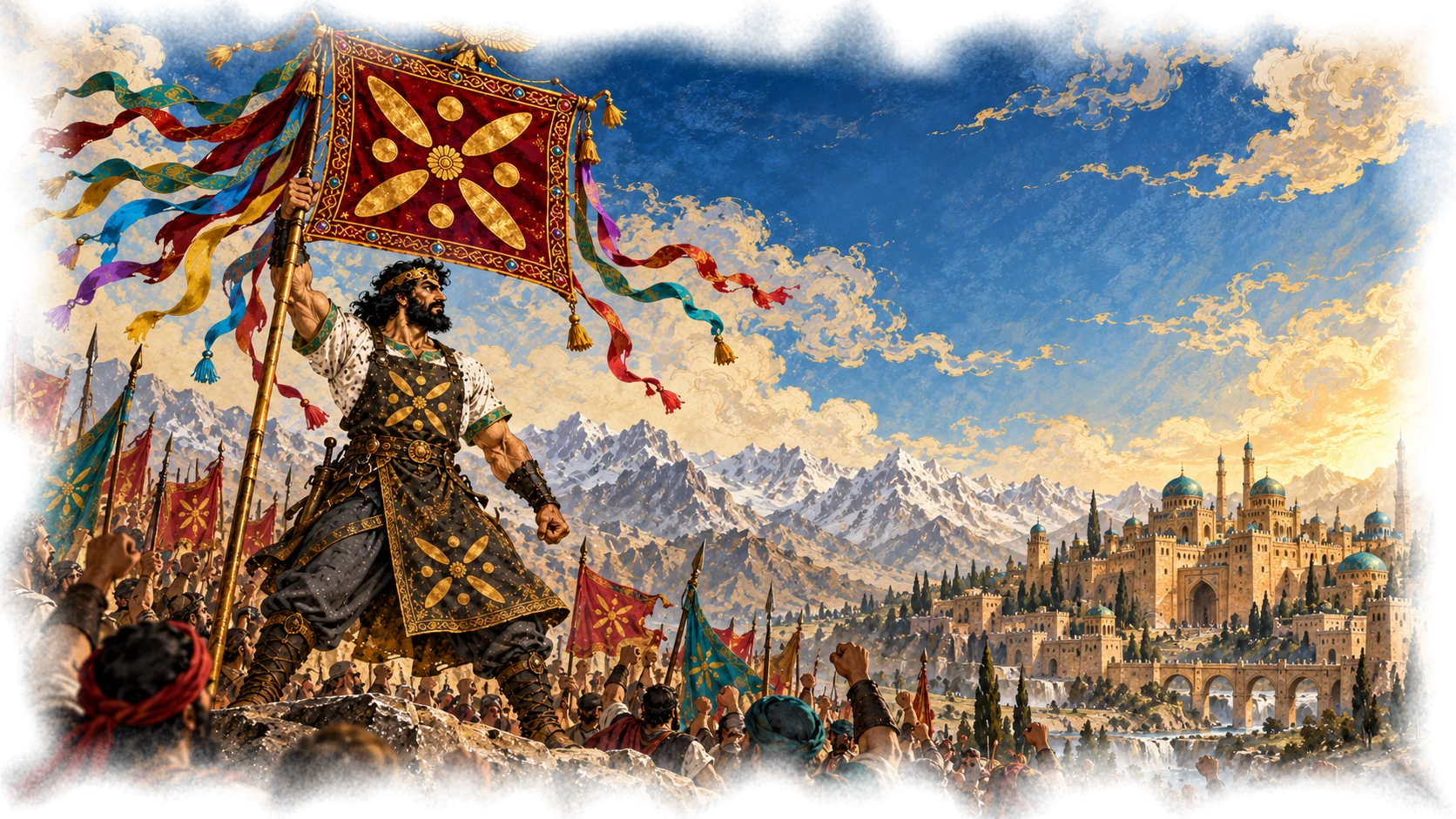
Outside, in the marketplace, a crowd gathered. Kaveh had nothing to give them but what he wore. He untied his leather apron, raised it on the point of a spear, and called out to anyone who wanted to be free of Zahhak to follow it.
It was an ordinary thing: a square of scorched and stained leather, the kind every smith in the city wore. But raised above the heads of the crowd, it became something else. People who had kept their eyes on the ground for a lifetime looked up at it.
They followed. Smiths and traders, labourers and the families of the taken sons. Day by day the crowd grew, until it was no longer a crowd but an army, and a piece of leather, still marked by the forge, had become the banner of a people who had stopped being afraid.
 V
VThe banner of Kaveh
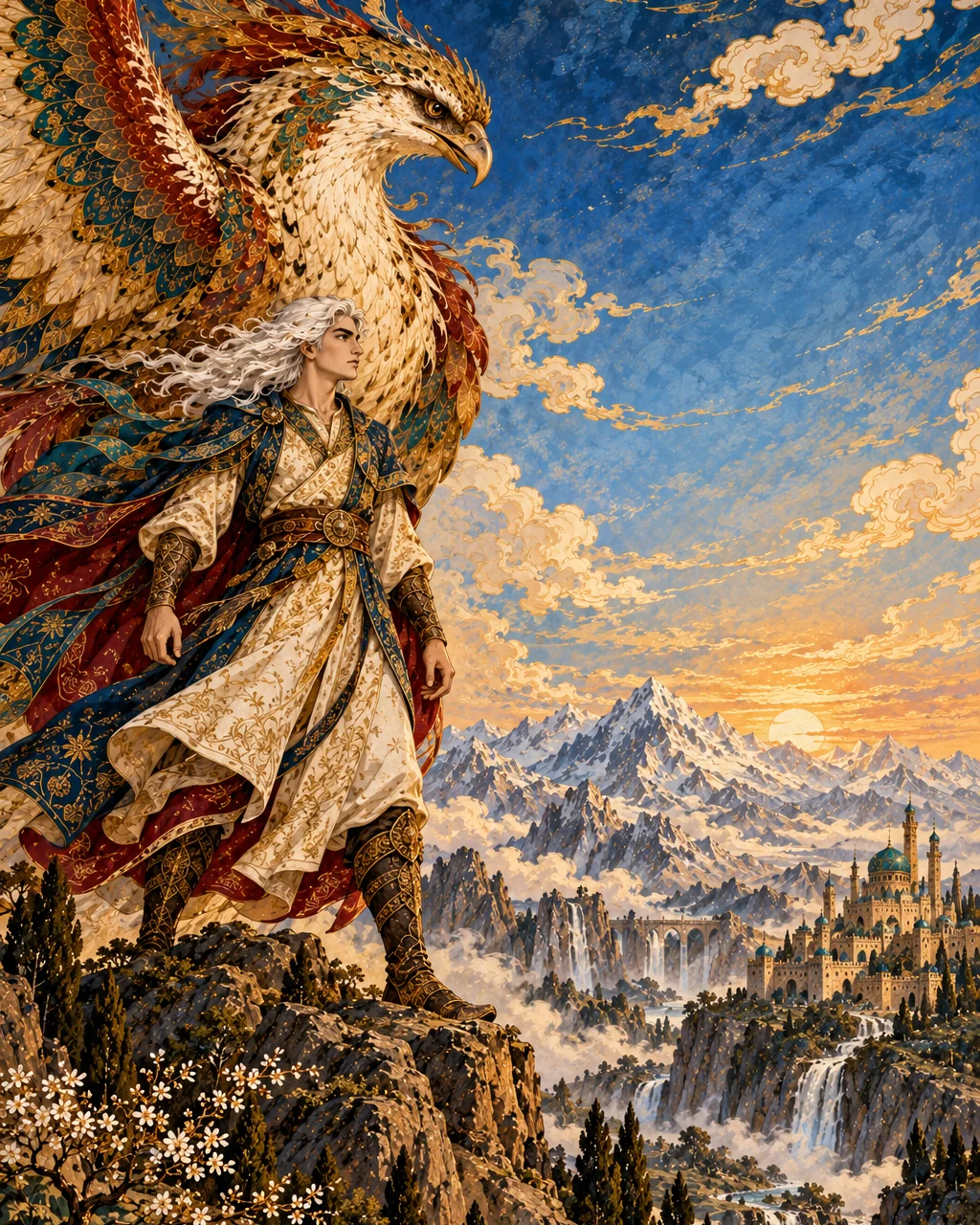
Kaveh led them to Fereydun, the young prince who had grown up hidden on Mount Alborz. Fereydun saw the apron for what it had become. He dressed it in brocade and jewels, hung it with ribbons of red, yellow and violet, and named it after the man who first raised it: the Derafsh Kaviani, the banner of Kaveh.
VIDamavand
With the banner before them, Fereydun's army took the serpent king's palace. Fereydun struck Zahhak down with his ox headed mace, just as the dream had foretold. But he did not kill him. The angel Sorush told him the tyrant's time had not yet come, so Fereydun bound him in chains and carried him to Mount Damavand, where he left him in a cave deep inside the mountain.
Some say he is there still.
Fereydun was crowned in the month of Mehr, and the autumn festival of Mehregan is still kept in memory of it.
VIIThe banner that remained
The Derafsh Kaviani became the royal standard of Iran. Each king who carried it, the story goes, added jewels of his own, until it glittered like the sun and could be seen across a battlefield. For centuries it went before Iran's armies, until it was lost in battle in the seventh century.
It began as a blacksmith's apron. That is the heart of the story. Courage did not come from a palace. It came from a working man with a leather apron and a refusal to sign.
A piece of leather, raised high enough, can carry a nation.
Today the four pointed star of the Derafsh sits at the centre of our Derafsh pieces, a small reminder that the humblest things can be raised high.