The white-haired child
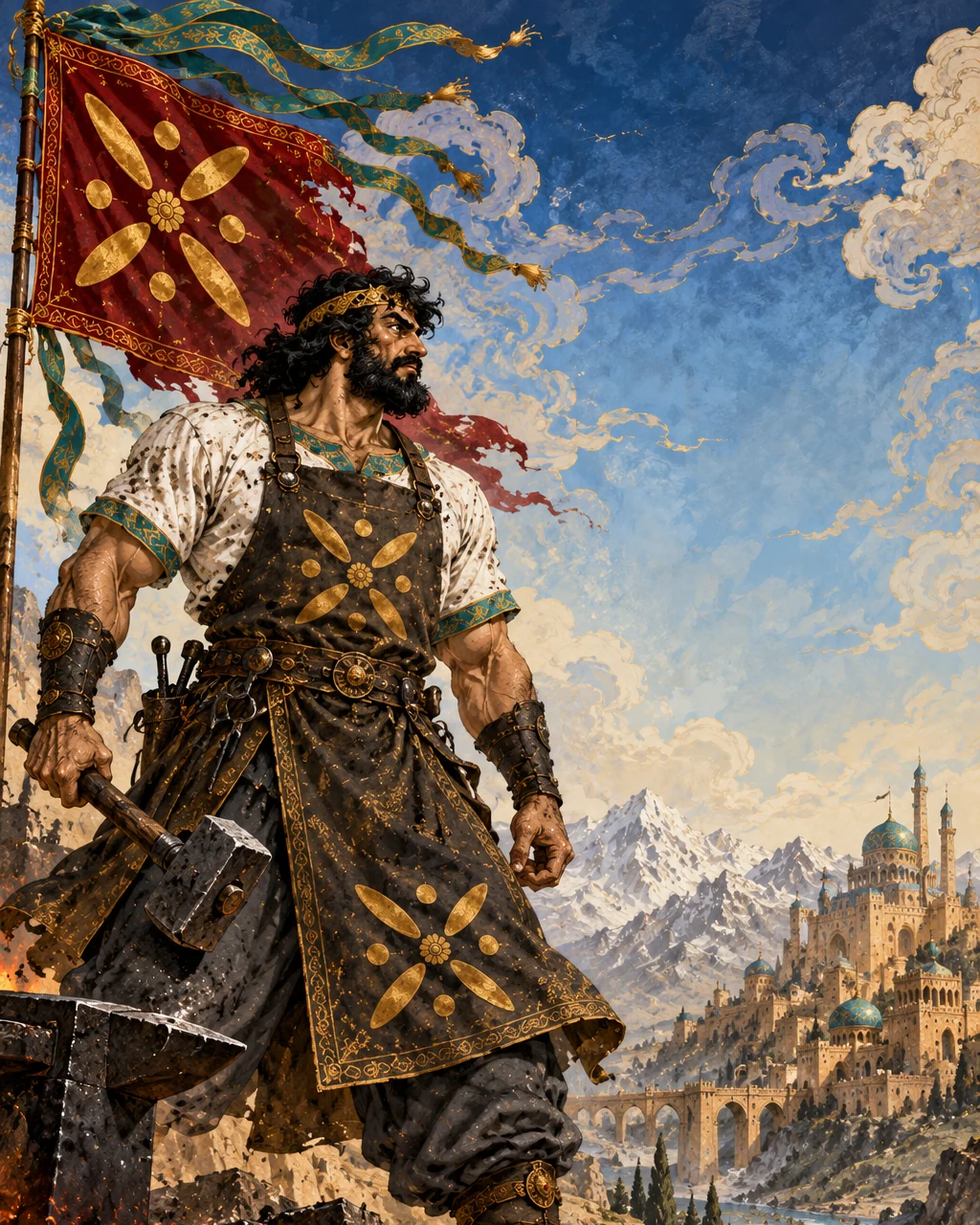
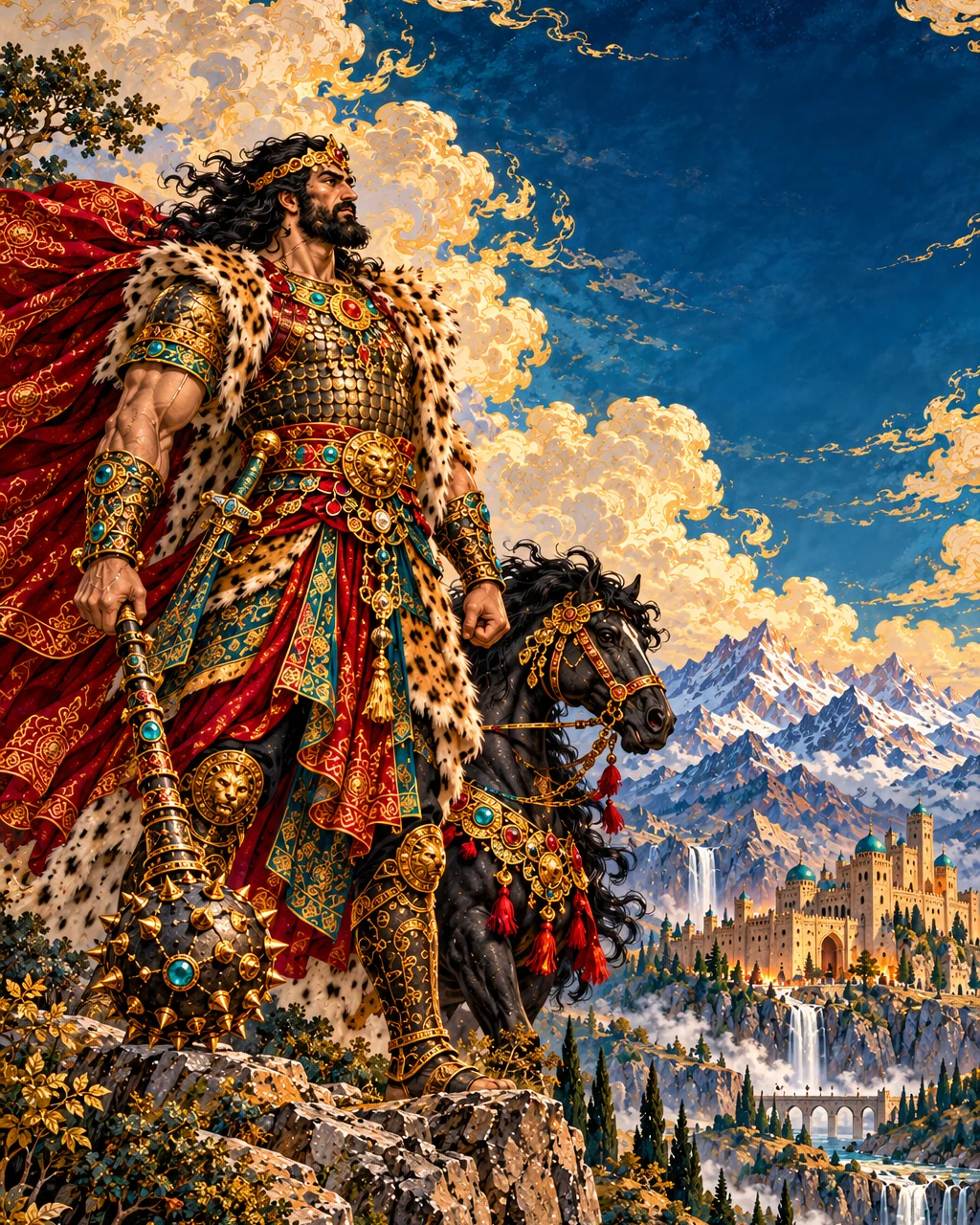
Sam was the greatest warrior of his age, the champion of Iran's kings and the lord of Zabol. He had everything a man could want except a son, and for years he prayed for one.
At last his wife gave birth to a boy. He was strong and beautiful, with a face as bright as the sun, but his hair was white, as white as an old man's. For days no one in the household dared to tell Sam. When a nurse finally found the courage, he came to see the child, and his heart turned cold.
Sam was afraid of what people would say: that the great warrior's son was the child of a demon, a curse sent to shame him. He could not bear it. He ordered the baby taken far from the city and left on the slopes of Mount Alborz, where no one would ever find him.
So the child was left on the mountain, alone.
 II
IIThe nest on Alborz
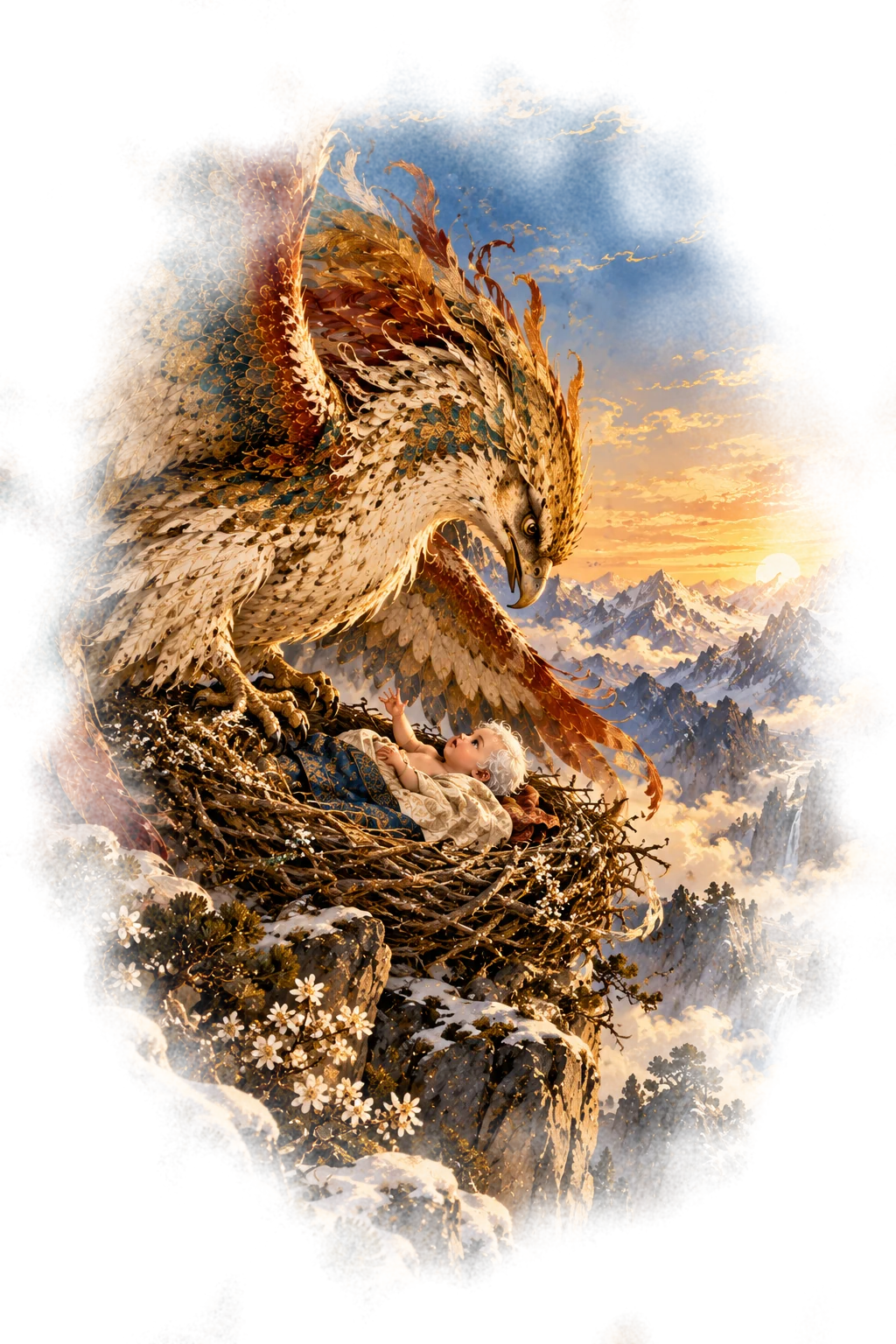
High on Alborz, above the clouds, lived the Simurgh: a great and ancient bird, wiser than any creature on earth, whose wings could darken the sky. Her nest, built of ebony and sandalwood, sat on the highest peak, and she was raising her young there.
One day, flying out to find food for her chicks, she saw a baby lying alone on the rocks below, crying with hunger. She swooped down and gathered him up in her talons.
She carried him back to the nest, and her chicks looked at the strange child with wonder. But the Simurgh did not feed him to them. Something in the little face moved her, and instead she fed him, kept him warm beneath her wings, and watched over him as if he were her own.
So the abandoned son of the greatest warrior in Iran was raised in a nest above the clouds, by a creature most people believed was only a legend.
IIIRaised among wings
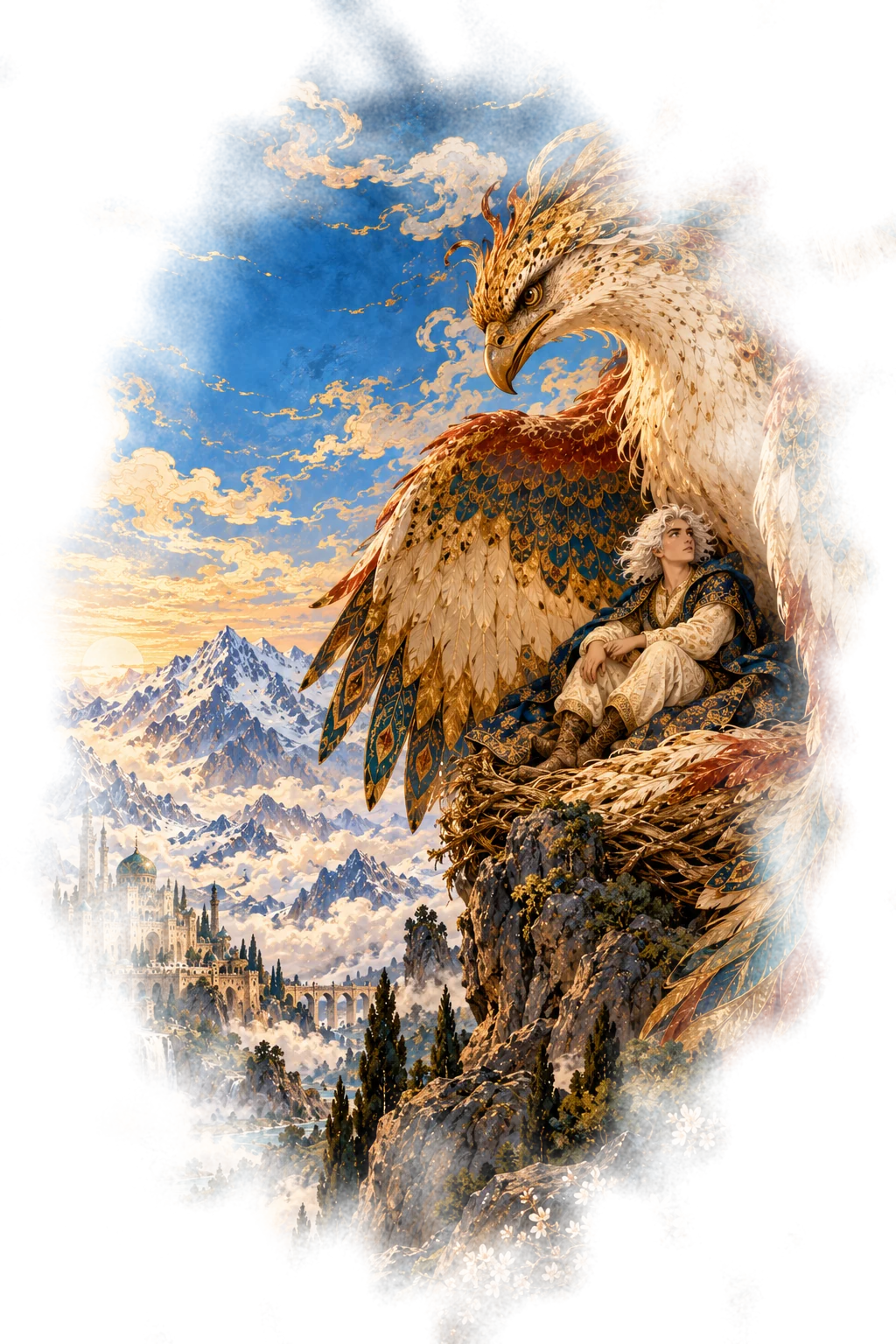
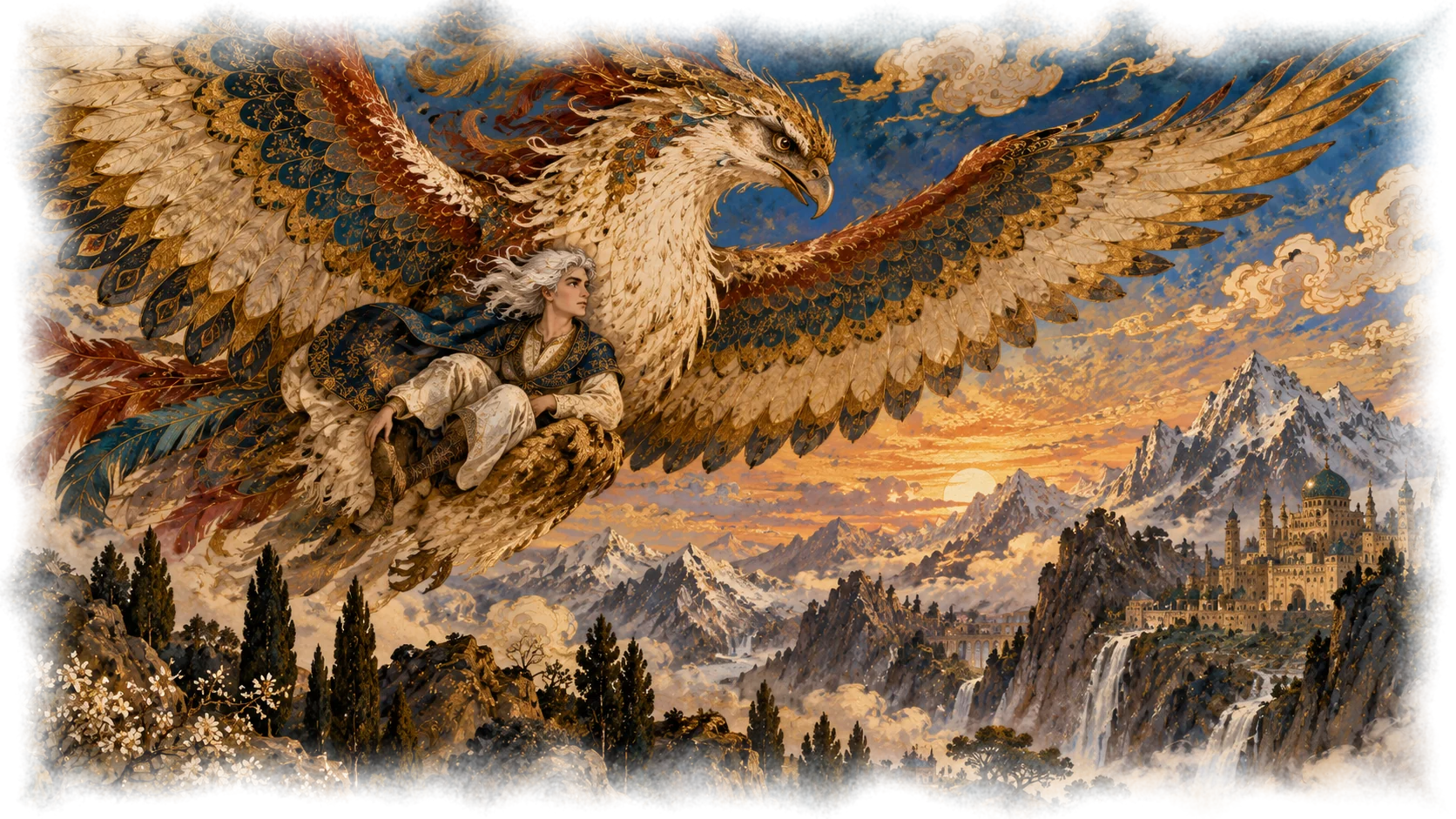
Years passed. The child grew tall and strong in the clouds of Alborz. He learned the wind and the stars, and he learned the Simurgh's wisdom, for she taught him everything she knew. She gave him a name of her own choosing: Dastan.
Travellers crossing the mountains began to talk of a young man they had glimpsed among the peaks, as straight as a cypress, with hair as white as snow, who lived with the great bird.
The stories spread from caravan to caravan, from town to town, until at last they reached Zabol.
The Simurgh heard the stories too. She knew they would travel, and she knew that one day someone would come looking for him.
IVA father's regret
By then Sam had long regretted what he had done. One night he dreamed of a rider who came to him with news that his son was alive. When he woke, he told the wise men of his court, and they did not spare him.
Even the birds and the beasts care for their young, they told him. How could a man abandon his own child for the colour of his hair?
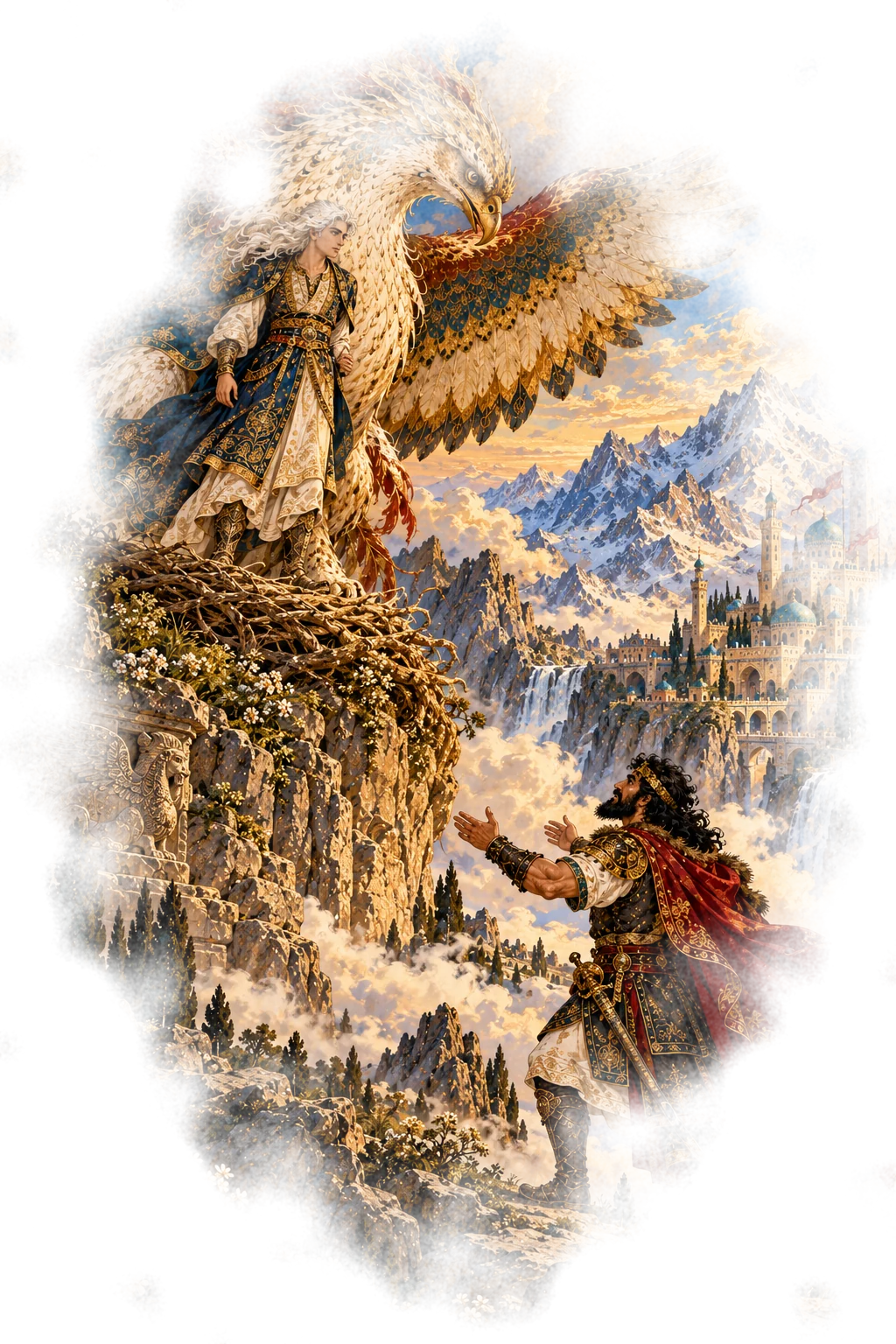
Sam set out for Alborz at once, riding day and night with a small band of men. When he reached the foot of the peak and saw the great nest far above him, and the young man standing beside the Simurgh, he wept, and he prayed to be forgiven.
The Simurgh heard him. She turned to the young man she had raised and told him that his father had come for him.
VThe feather
Dastan did not want to leave. The nest was the only home he had ever known, and the Simurgh the only mother. But she told him that his place was now among people, and that a great future waited for him there.
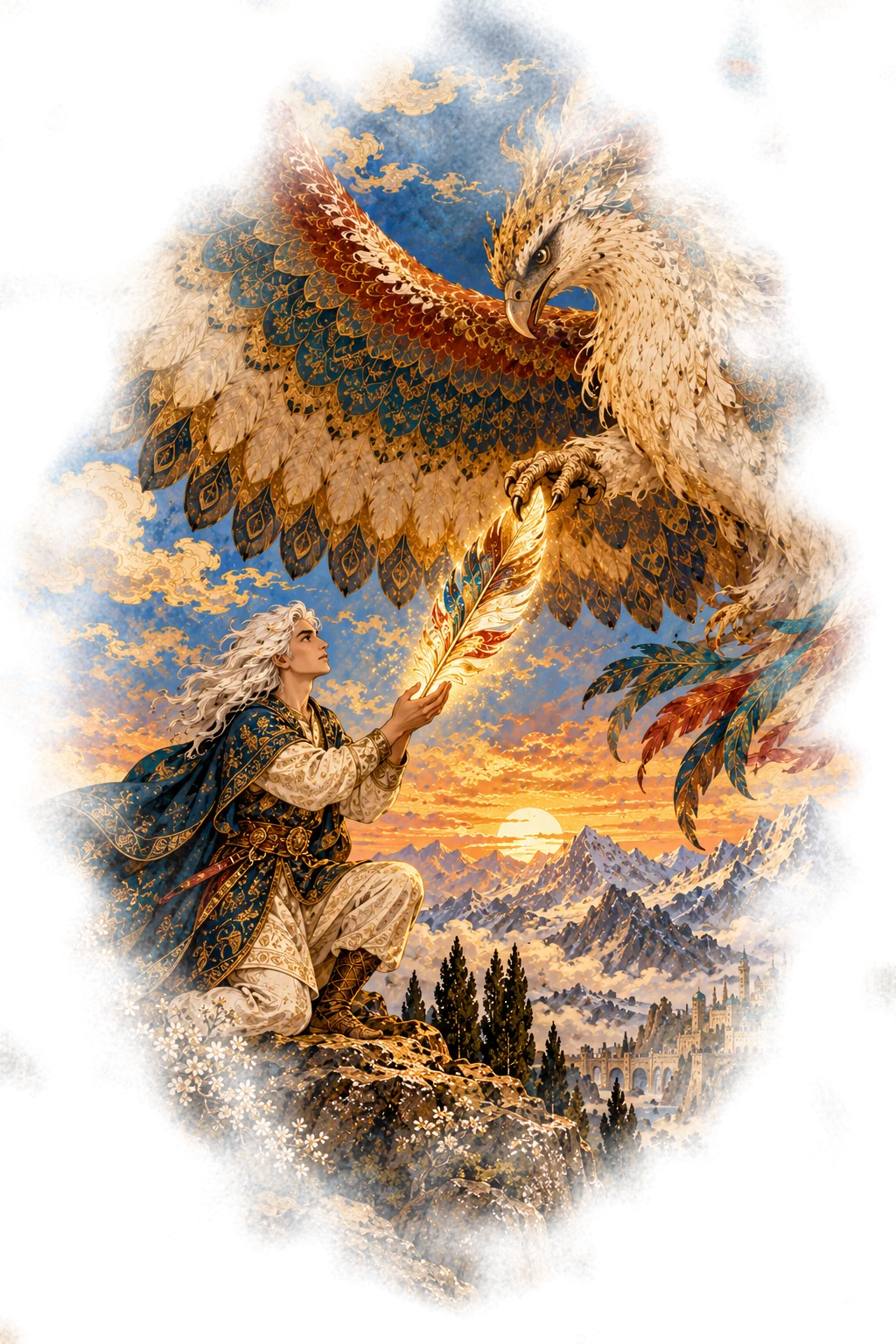
Before they parted, she plucked one of her own feathers and placed it in his hands. Keep this, she told him. If you are ever in danger, or in sorrow you cannot bear, burn it, and I will come to you.
Then she lifted him on her back and carried him down from the mountain to his father. Sam held his son for the first time since the day he was born, and named him Zal.
Zal kept the feather close for many years. He never needed to burn it, but he never forgot that it was there.
Burn this feather, and wherever you are, I will come.
VIRudabeh
Zal grew into a prince of Zabol, as wise as he was brave, for he had learned his wisdom from the Simurgh. In time he fell in love with Rudabeh, the princess of Kabul, a woman as famous for her beauty as for her courage.
Their love was not easy. Her family descended from Zahhak, the serpent king, and many in Iran opposed the match. When Zal came to her at night, Rudabeh let down her long black hair from the tower so that he could climb to her. Zal would not hurt her by climbing it. He threw up his lasso instead.
In the end, love and patience won. Zal and Rudabeh were married, and before long she was expecting a child.
VIIThe feather burns
The child grew so large that Rudabeh could not give birth. Her labour went on and on, until she was close to death, and the whole household despaired.
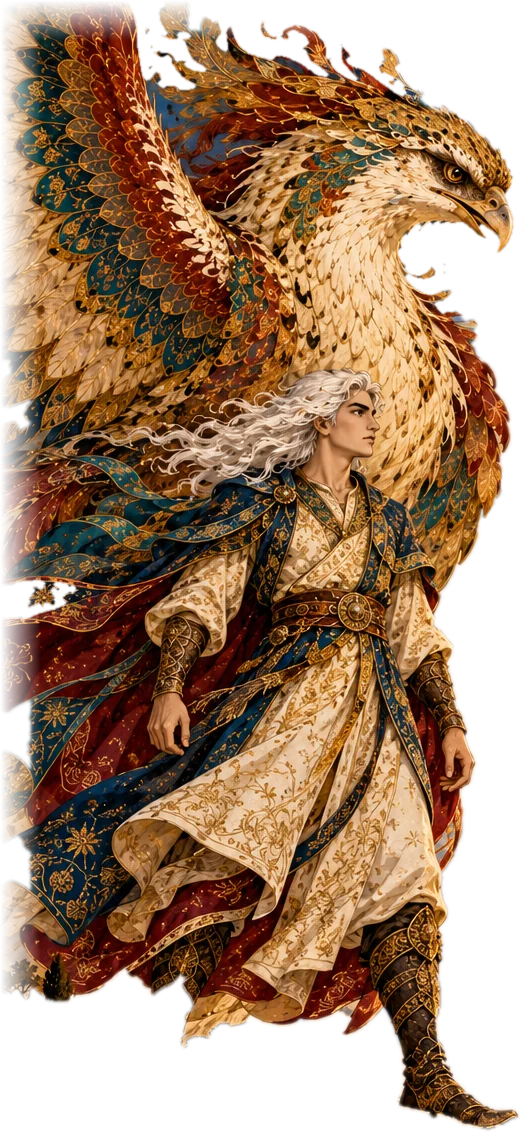
Then Zal remembered the feather. He brought fire and burned it, and at once the sky darkened as the Simurgh came down from the clouds.
Through the smoke she spoke to him gently. Why this grief? she asked him. Do not be afraid. The child your wife is carrying will be a lion among men.
She told him exactly what to do: to bring a skilled healer, to give Rudabeh wine so that she would feel no pain, and to open her side and lift the child out. Then the wound should be sewn, and soothed with herbs mixed with milk and musk, and stroked with one of her feathers.
It was done just as she said. Rudabeh slept, and when she woke the pain was gone and her son was in her arms, enormous and full of life. She cried out in relief that she was delivered. In Persian the word is rastam, and so the child was named Rostam.
He would grow up to be the greatest hero the Shahnameh knows.
VIIIWhat seemed a curse
The story of Zal begins with a father who saw something strange and called it a curse. It ends with that same strangeness giving Iran its greatest hero.
The white-haired child the world rejected was raised by the wisest creature in it. He grew up with a wisdom no ordinary prince could have learned, and the feather he carried down from the mountain saved the life of his wife and his son.
The child they called a curse was the one who saved them.
The Simurgh would come again, many years later, when Rostam himself needed her. She remains one of the most beloved figures of Persian myth: a guardian, a teacher, and a reminder that protection can come from where we least expect it.