Persian Falcon
Bag (0)
Persian Falcon
HomeShopCollectionsStoriesBrandFAQ
SearchDelivery and returnsContact
Stories/The symbols
The symbols

The Shahbaz

The royal falcon of ancient Persia, and the divine glory it carried to those who proved worthy of it.

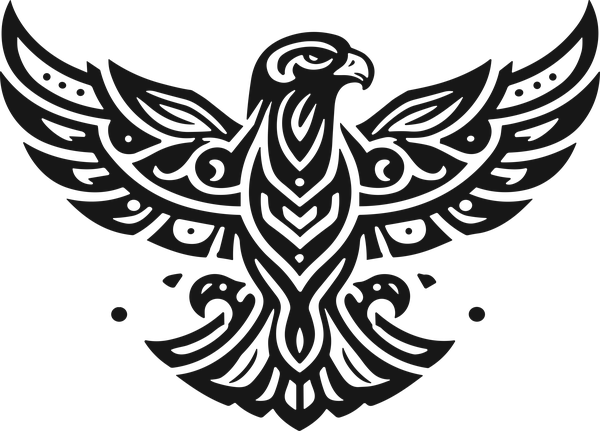
The Shahbaz symbol
I

The royal falcon

The word Shahbaz (شهباز) translates simply as "royal falcon." But what it carries is far more than a title.

In the Avesta, the sacred scripture of Zoroastrianism and among the oldest religious texts in the world, the falcon appears as the varəγna, one of the forms taken by Verethragna, the god of victory. Its role was specific and significant: to carry farr (فرّه), divine royal glory, to those rulers who were worthy of it.

Farr was not inherited. It was not automatic. It could be lost by a king who strayed from righteousness, as the myth of Jamshid describes. The falcon was its guardian and its messenger.
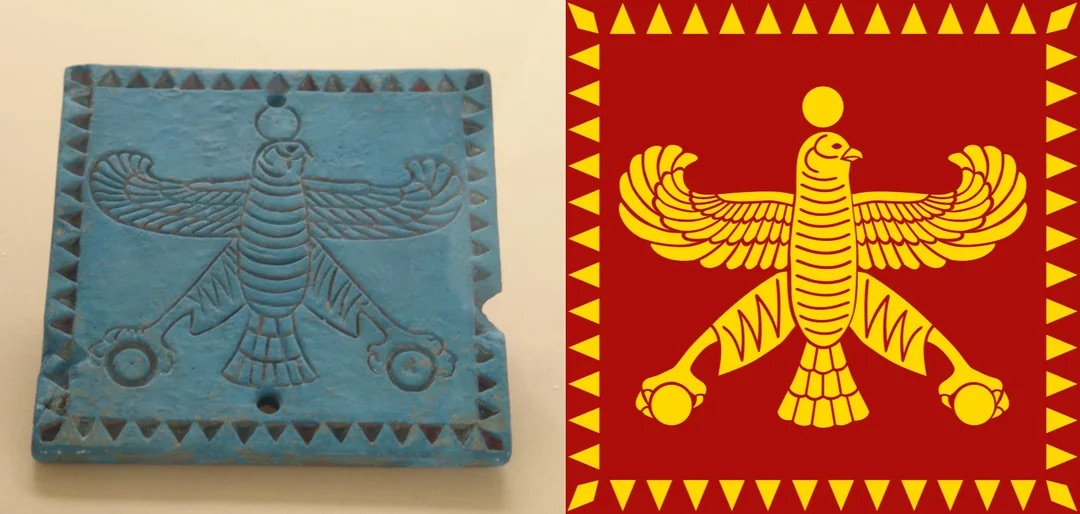
A blue glazed Achaemenid plaque showing the Shahbaz, beside a red and gold rendering of the royal falcon standard
An Achaemenid glazed plaque bearing the royal standard, found at Persepolis (left), and a modern rendering of the standard (right). National Museum of Iran, Tehran.

This is a fundamentally different idea from simple strength. The Shahbaz does not represent power for its own sake. It represents power that must be earned and can be taken away.
II

What the Shahbaz represents

The falcon embodies a particular set of qualities that Persians valued above brute force: vision that sees beyond the immediate, patience that waits for the right moment, and precision when action is finally required. It hunts not from desperation but from purpose.

This is why the farr concept matters. The Shahbaz does not represent power as a possession. It represents power as a responsibility, something extended to worthy rulers and withdrawn from those who failed. A symbol with that kind of moral weight is rare in any culture.

Power as a responsibility, not a possession.
III

The Shahbaz in Persian history

By the time of the Achaemenid Empire, this mythology had crystallised into one of the most enduring standards in Persian history. The Royal Falcon, rendered in the red and yellow colours that Persian Falcon draws from today, became the Derafsh of Cyrus the Great, the founder of the Achaemenid Empire and the man behind the Cyrus Cylinder, often described as the first charter of human rights. Several scholars believe the standard appears in the Alexander Mosaic from Pompeii, visible at the battle of Issus. A Persian standard still flying as two empires collided.

It passed from the Achaemenids through the Sasanians. It survived the end of empires. It appears in Persian poetry, in Rumi, in Hafez, as a metaphor for the soul seeking something higher than the ordinary.

IV

In our collection

The Royal Falcon runs through our entire collection. Pieces made to be worn quietly, with the full weight of what this symbol has carried for thousands of years.

Pieces with this symbol

Pieces with this symbol

Shop all
Onyx Shahbaz Pendant, front
Onyx Shahbaz Pendant£35.00
Turquoise Shahbaz Pendant, front
Turquoise Shahbaz Pendant£35.00
Anaar Shahbaz Pendant, front
Anaar Shahbaz Pendant£35.00
Saffron Shahbaz Keyring, front
Saffron Shahbaz Keyring£30.00
Midnight Shahbaz Keyring, front
Midnight Shahbaz Keyring£30.00
Turquoise Shahbaz Keyring, front
Turquoise Shahbaz Keyring£30.00
Anaar Shahbaz Pin, front
Anaar Shahbaz PinFrom £24.00
Midnight Shahbaz Pin, front
Midnight Shahbaz Pin£28.00
Turquoise Shahbaz Cufflinks, front and back
Turquoise Shahbaz CufflinksComing soon
Saffron Shahbaz pendant in orange enamel with green stones
Saffron Shahbaz Pendant£35.00
Citrine Shahbaz pendant in yellow enamel with red stones
Citrine Shahbaz Pendant£35.00
Anaar Shahbaz keyring in red enamel with red stones
Anaar Shahbaz Keyring£30.00
Emerald Shahbaz pin in green enamel with red stones
Emerald Shahbaz PinFrom £24.00
Saffron Shahbaz pin, front view
Saffron Shahbaz PinFrom £24.00
Turquoise Shahbaz pin in turquoise enamel with red stones
Turquoise Shahbaz PinFrom £24.00
PreviousRostam and the White DemonNextThe Derafsh Kaviani
More stories

Continue reading

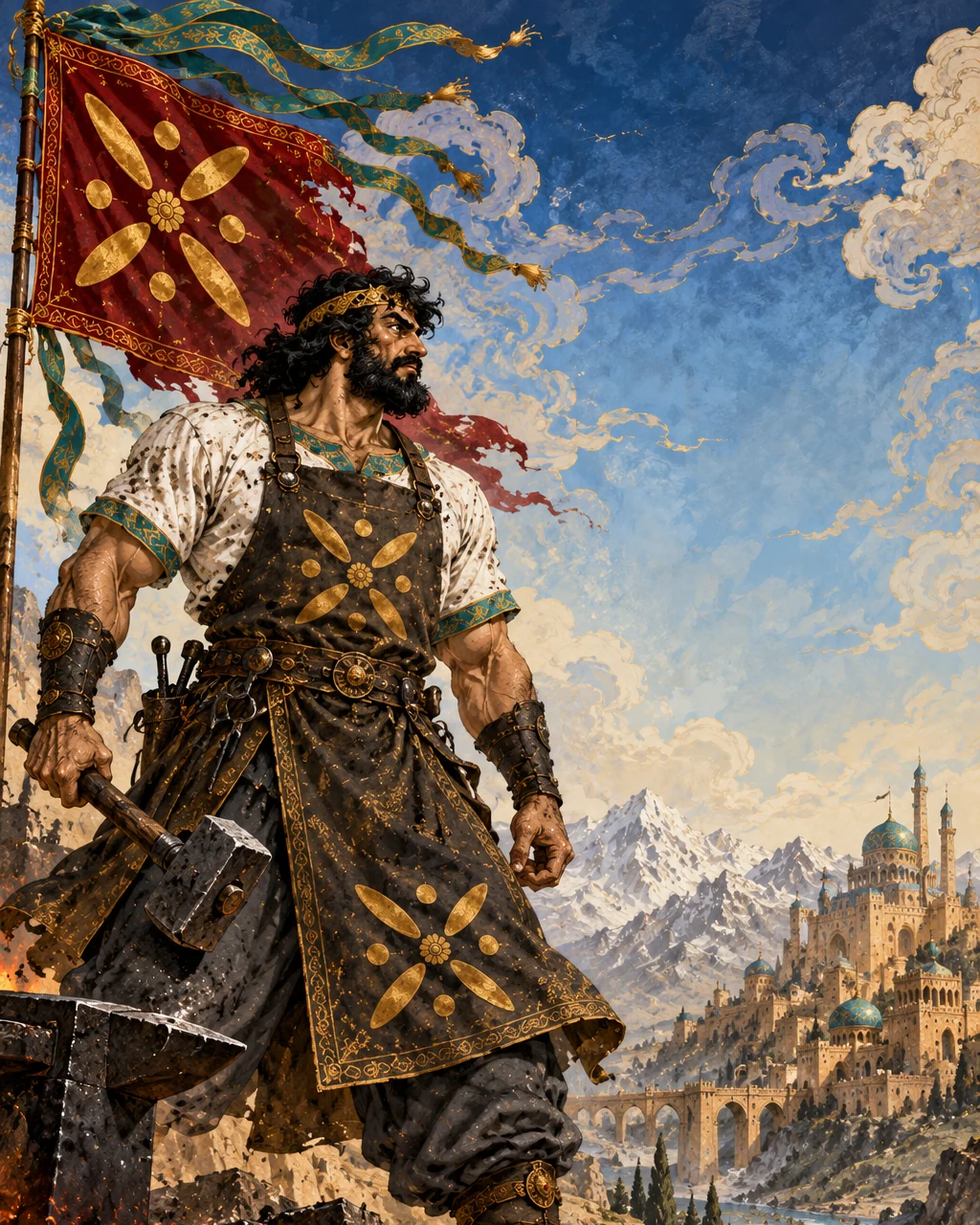
Kaveh the blacksmith beneath the Derafsh Kaviani

Kaveh the Blacksmith

A tyrant with serpents on his shoulders, a father who had lost seventeen sons, and a leather apron that became the banner of Iran.

Read the story
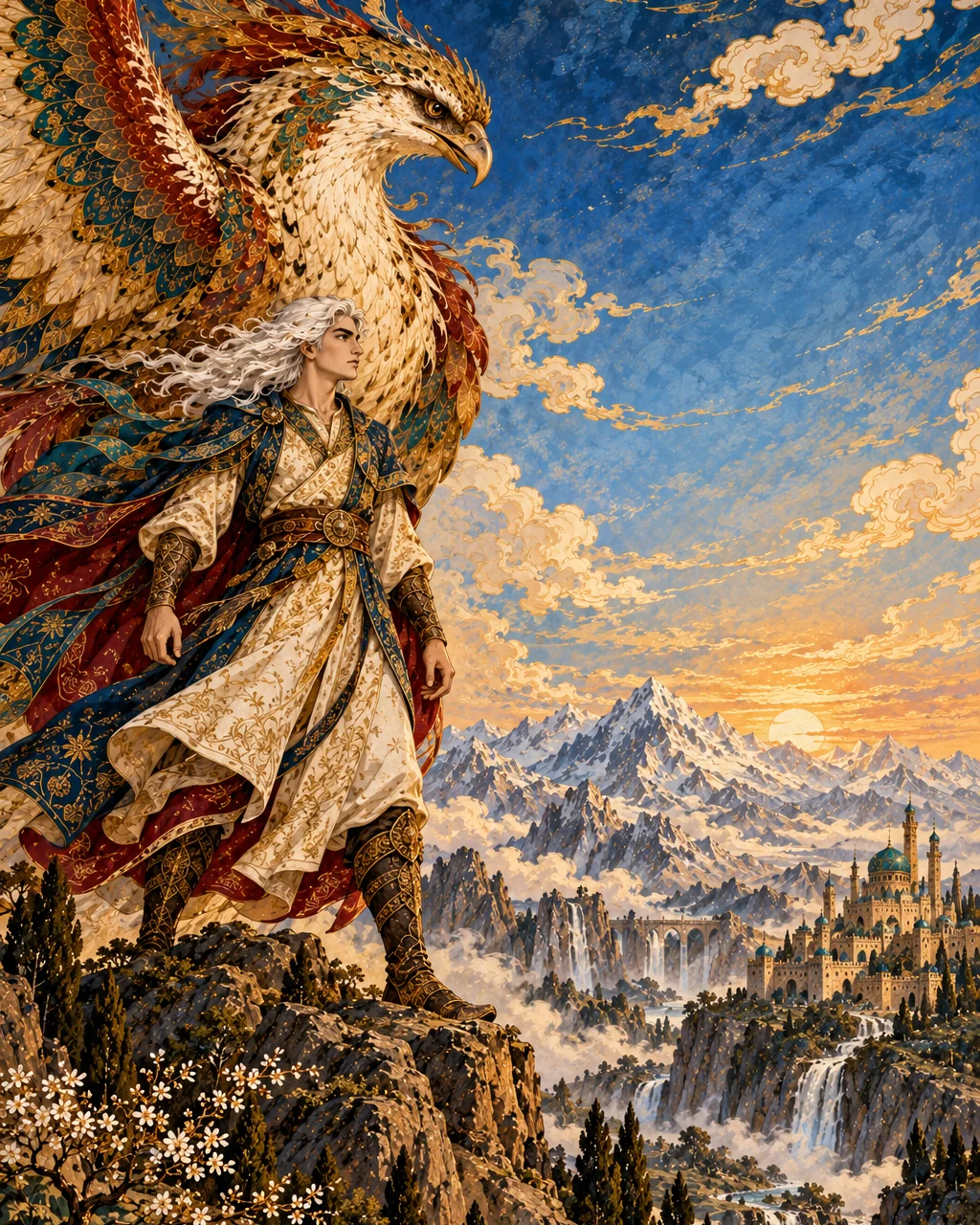
Zal stands before the Simurgh on the slopes of Mount Alborz

Zal and the Simurgh

A child abandoned for the colour of his hair, a great bird who raised him as her own, and a feather that would one day save a life.

Read the story
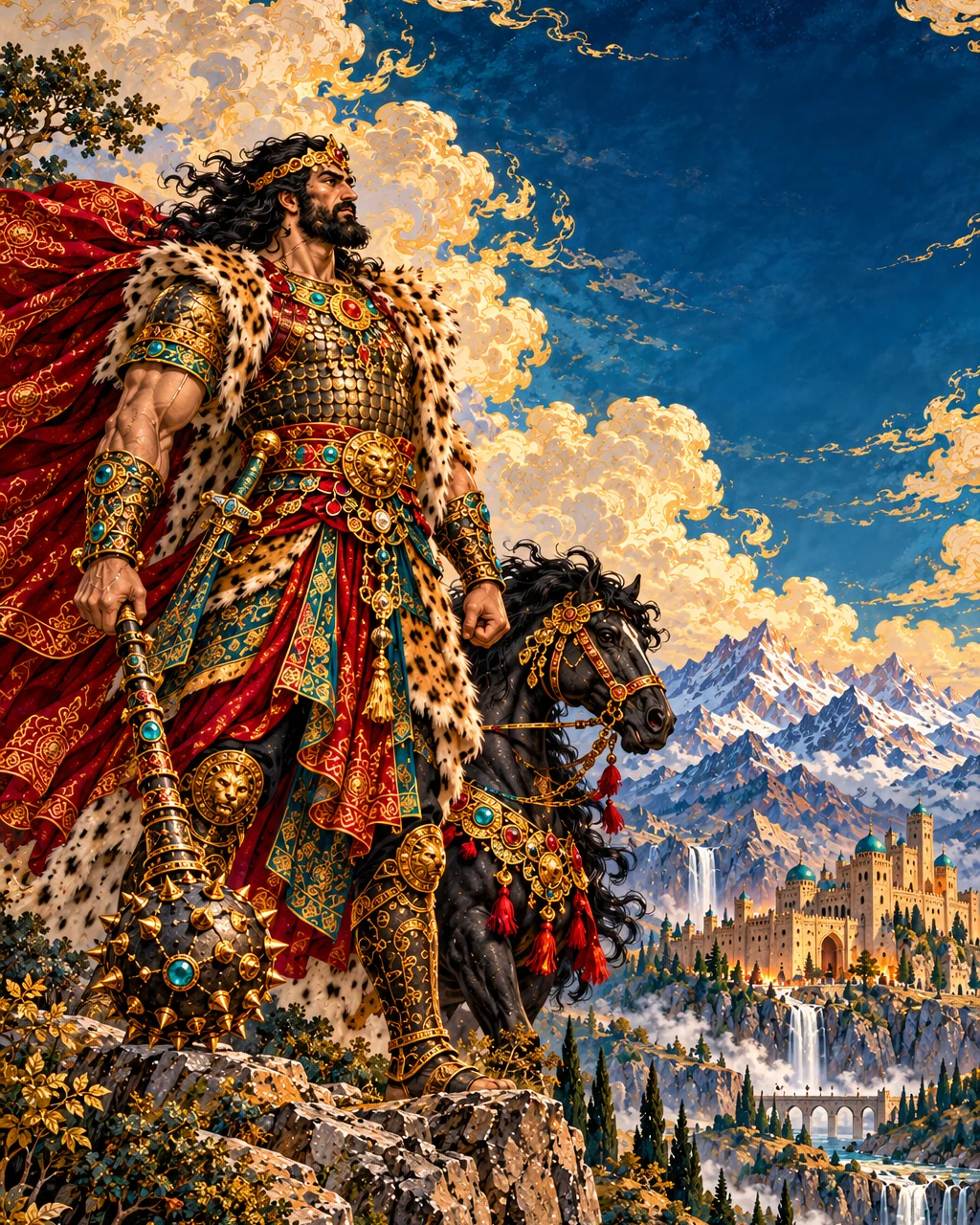
Rostam stands beside his horse Rakhsh, his mace in hand

Rostam and the White Demon

A king who would not listen, a hero who took the dangerous road, and the demon whose blood could give back the light.

Read the story
The Derafsh Kaviani symbol

The Derafsh Kaviani

A blacksmith's apron that became the banner of an empire, and a symbol no conquest could erase.

Read the story
The Faravahar symbol

The Faravahar

A winged figure carved above the tombs of kings, now worn by Iranians all over the world.

Read the story
Persian Falcon

Jewellery from the visual language of ancient Iran.

Instagram

Shop

PendantsKeyringsCufflinksPins

Learn

The ShahbazThe Derafsh KavianiThe FaravaharBrand

Help

DeliveryReturnsCare guideContactFAQPrivacy policyTerms