The Persian Cross
The Persian Cross is one of the most misunderstood symbols in history. It is not religious in origin. It is a mark of Persian identity that predates the religions commonly associated with cross symbols by centuries.
Its proper name is the Derafsh Kaviani (درفش کاویانی), meaning the Standard of Kaveh. It was the legendary national standard of pre-Islamic Iran, carried through successive dynasties from the Achaemenids through the Parthians and into the Sasanian Empire, which used it as its imperial banner until 651 CE. The word derafsh simply means flag or standard. What it stood for was something far greater.
 II
IIWhat the Persian Cross represents
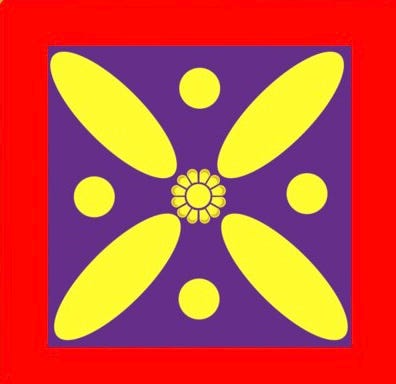
At its centre sits a lotus flower, one of the oldest and most layered symbols in Persian culture. In Zoroastrianism it is associated with Ahura Mazda, the supreme force of light and goodness. In Persian mythology it is the flower of Anahita, goddess of water and purity. It appears in the hands of Darius at Persepolis, held as a symbol of loyalty and divine order. It is a flower that rises from murky water to face the sun, which is why Persians understood it as an emblem of the soul's capacity to rise above difficult conditions.
The four sections radiating outward are associated with the four classical elements: earth, air, fire, and water. The four directions. The fundamental structure of the world as ancient Persians understood it. The cross form itself represents balance, the meeting of opposing forces at a single point of harmony. This was not merely decorative. It was a Persian philosophical statement about the nature of order.
The colours carry meaning too. Red for grandeur, energy, and divine power. Yellow for the sun, light, and enlightenment. Purple for the highest of the deities, Ahura Mazda himself, signifying bravery and the struggle against darkness.
IIIThe Cross in Persian history
The story of the Derafsh Kaviani begins not with an emperor, but with a blacksmith.
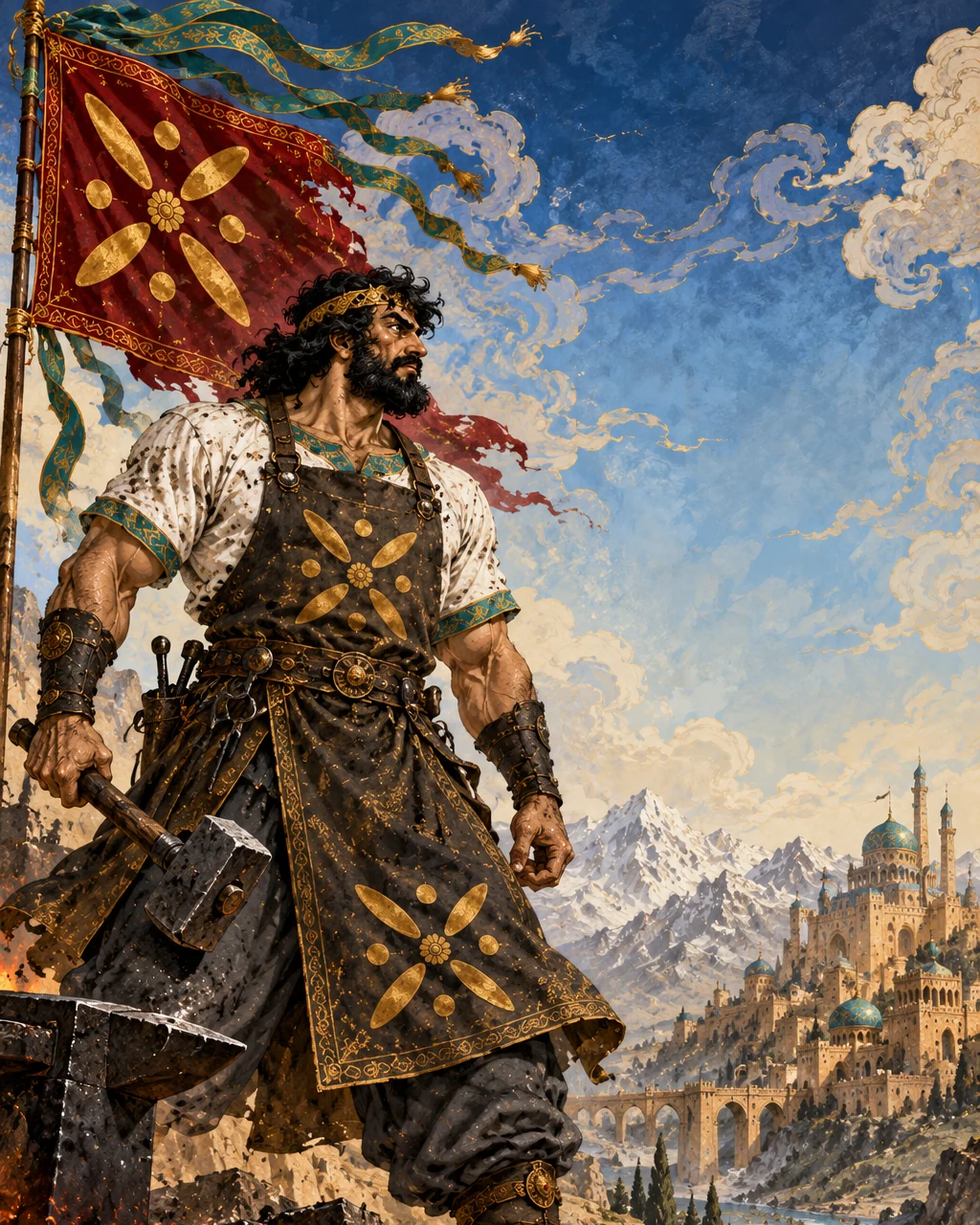
According to the Shahnameh, the great national epic of Iran written by Ferdowsi in the 10th century, the Iranian throne had been seized by the tyrant Zahhak, a ruler associated in Zoroastrian tradition with Angra Mainyu, the force of evil itself. A blacksmith named Kaveh, having lost sons to Zahhak's cruelty, rose in defiance. He tied his leather work apron to a spear and raised it above his head to rally the Iranian people. It was the most ordinary object imaginable. It became the most powerful symbol in Persian history.
After the rebellion succeeded and Fereydun took the throne, the people adorned Kaveh's apron with gold, jewels, and tassels of red, yellow, and purple. The humble apron became the Derafsh Kaviani. A blacksmith's tool became the standard of an empire.
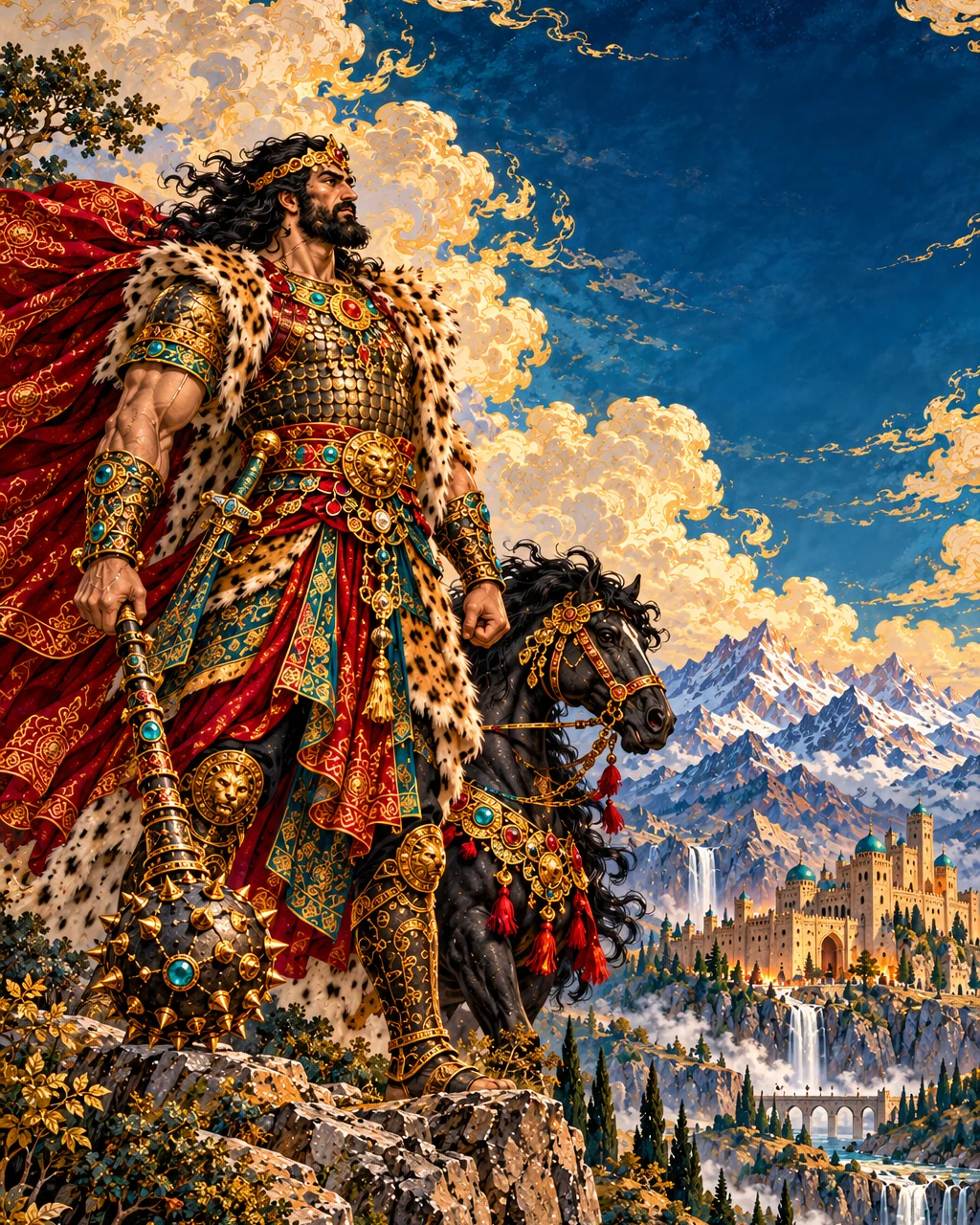
From that point it was carried through centuries of Persian history, growing more elaborate with each dynasty that inherited it. Under the Sasanians it became the centrepiece of the imperial army, so significant that its capture on a battlefield was considered the loss of the battle itself. When Arab forces defeated the Sasanians at the Battle of al-Qadisiyyah in 636 CE, they captured the Derafsh Kaviani and destroyed it. It was a deliberate act. They understood what it meant.
A blacksmith's tool became the standard of an empire.
But a symbol that powerful does not disappear with the object that carried it. The Derafsh Kaviani re-emerged during the Iranian Intermezzo as Iranians began reclaiming their cultural identity within an Islamicised world. It appeared in poetry, in nationalist writing, in revolutionary rhetoric. In the 19th century it was invoked in debates about the purity of the Persian language. In the 20th century it was considered as a replacement for the national emblem. Today it continues to represent, for many Iranians, the pre-Islamic heritage that no conquest has been able to erase.
IVIn our collection
We include the Persian Cross in our collection to reclaim it as what it originally was: a symbol of Persian heritage and identity. It is offered as a connection to this ancient culture, not as a religious statement.