The king who would not listen
Kay Kavus was king of Iran: rich, proud and restless. One day a demon came to his court disguised as a minstrel and sang to him of Mazandaran, a land of endless gardens where roses bloomed all year and the streams ran clear. Kavus listened, and he wanted it.
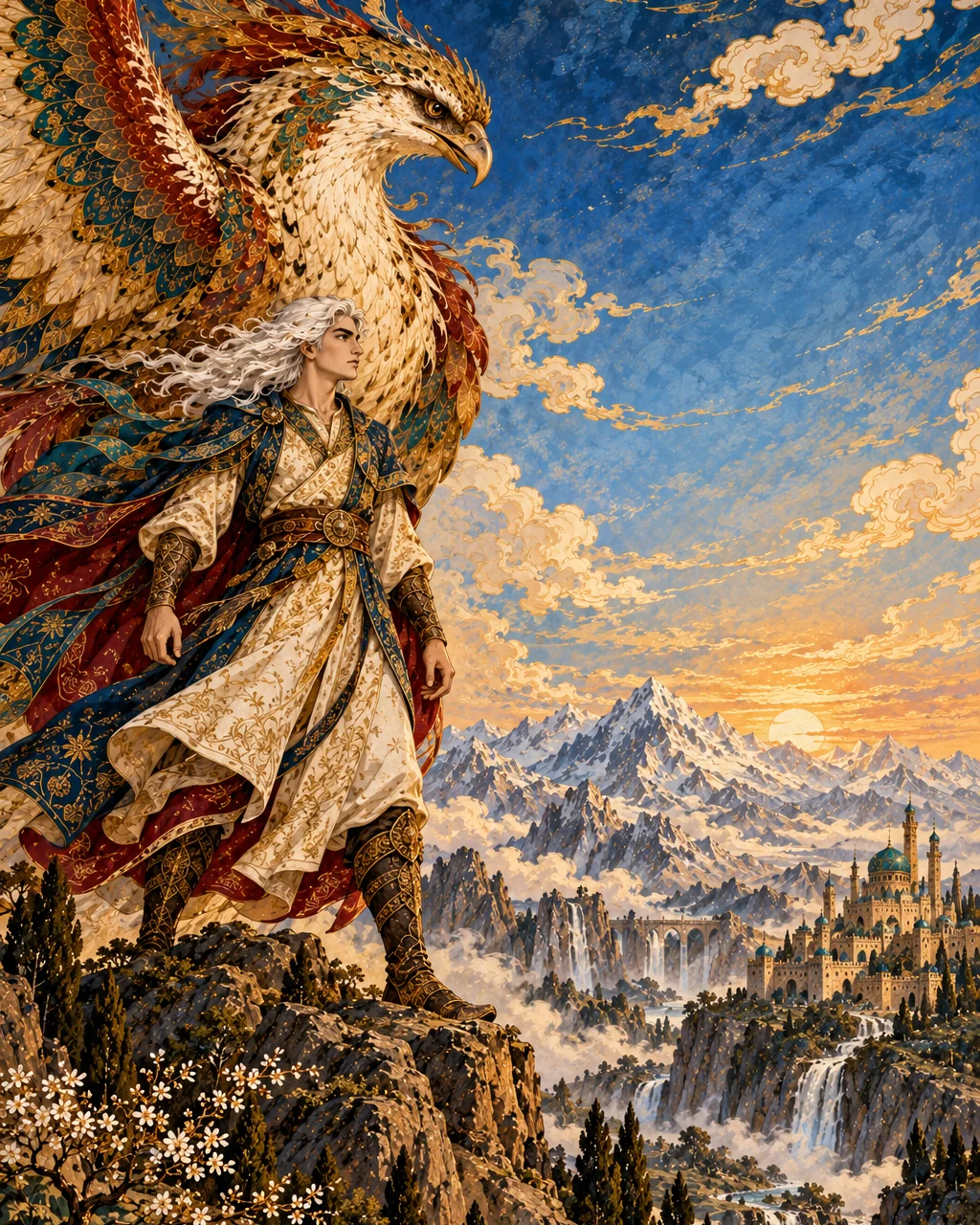
His nobles begged him not to go. Zal, the old warrior, rode in from Zabol to warn him that Mazandaran was the land of the demons, and that even the greatest kings before him had never dared to take it. Kavus would not listen.
He marched. At first the land opened before him. Then the king of Mazandaran called on the White Demon, the most powerful of all the demons, and the White Demon came down on the Iranian army like a storm.
Darkness fell over the camp. Hail and stones fell from a black sky. When the darkness lifted, the king and his warriors could no longer see. Blind and helpless, they were taken captive and held under guard, and Kavus, too late, sent word to Zal.
Zal sent the one person he trusted to bring them home: his son, Rostam.
 II
IITwo roads
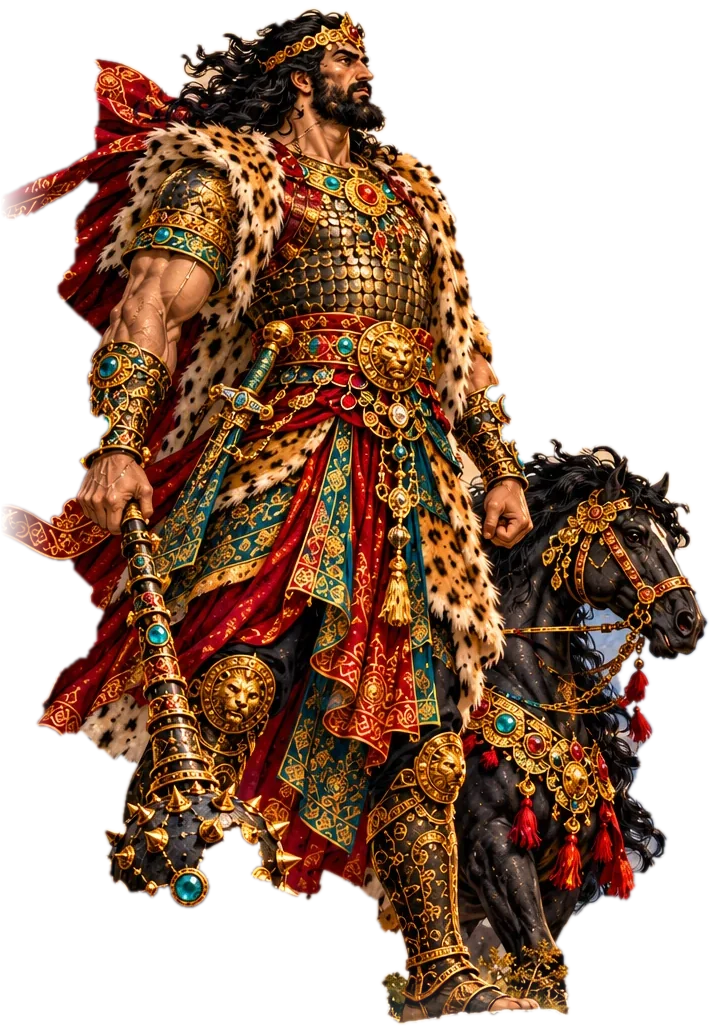
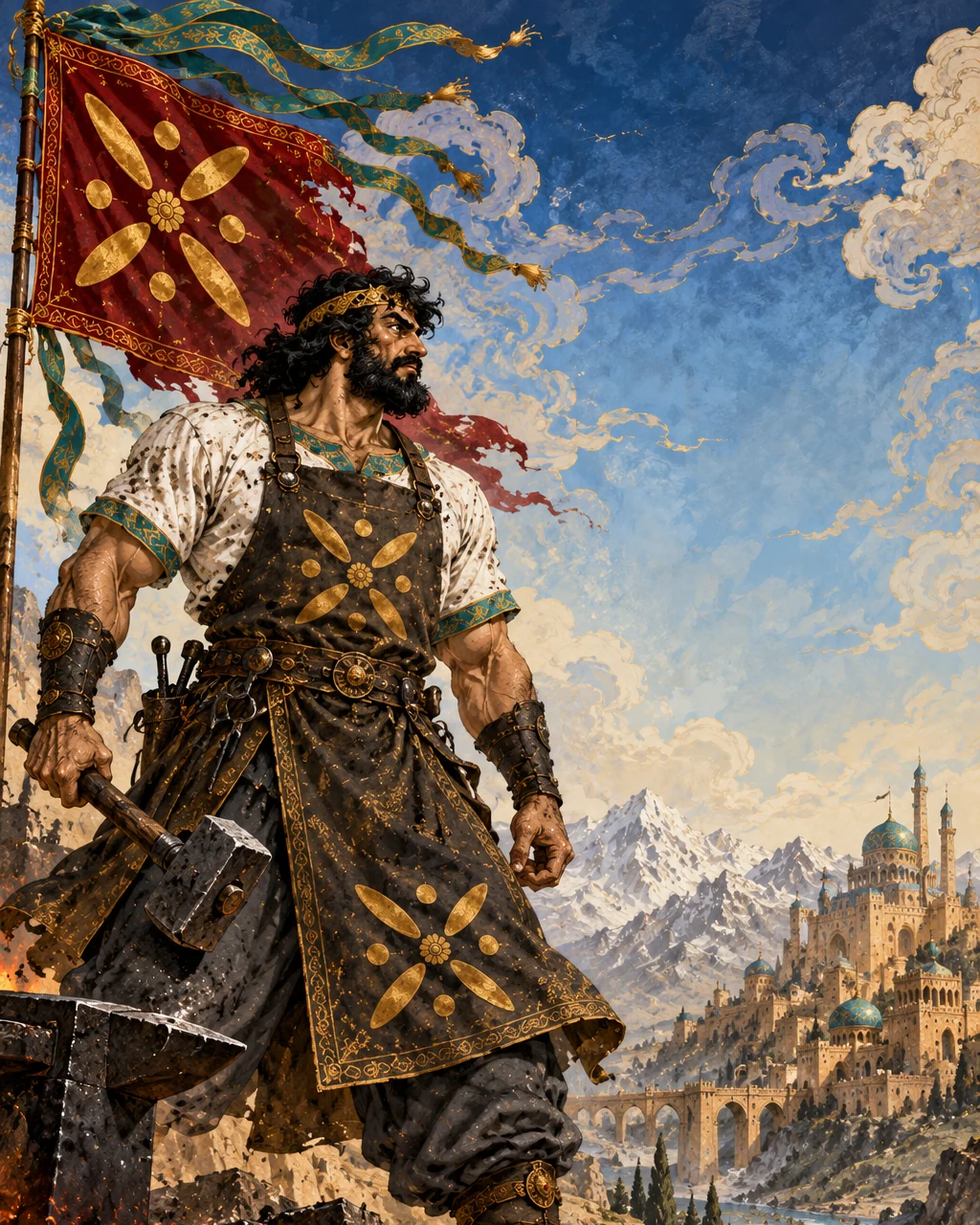
Rostam was the greatest warrior Iran had known, and he rode Rakhsh, a horse as fearless as he was. When Rostam was young he had chosen him from all the horses of Zabol by pressing his hand on their backs. The others sank beneath his weight. Rakhsh stood firm.
Between Rostam and the captive king lay two roads. One was long and safe, and would take months. The other was short, and it ran straight through a wilderness of lions, dragons, demons and sorcery.
Rostam took the short road. Every day the king spent in darkness mattered more to him than his own safety. He put on his spotted war coat, took up his grandfather's mace, and rode out alone.
The road gave him seven trials, one after another. They are remembered as the Seven Labours of Rostam: the Haft Khan.
IIIThe Seven Labours
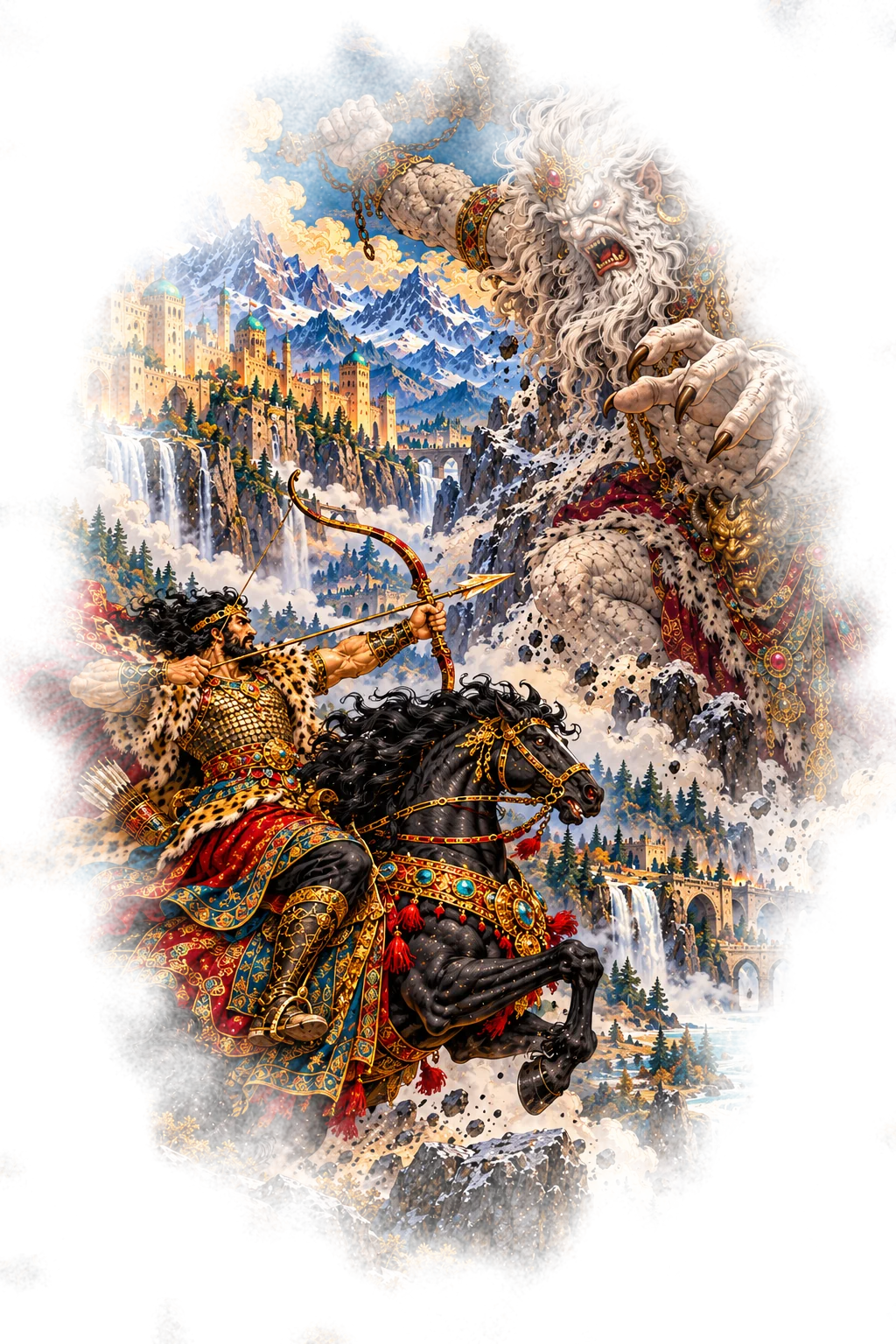
In the first, Rostam lay down to sleep in a bed of reeds, and a lion came for him in the night. Rakhsh fought it alone and killed it before his master woke.
In the second, the road crossed a desert so dry that Rostam fell from the saddle, close to death. He prayed, and a ram appeared on the sand and led him to a spring.
In the third, a dragon came out of the dark. Twice Rakhsh woke him, and twice it vanished before Rostam could see it. The third time he saw it, and horse and rider killed it together.
In the fourth, he found a feast laid out beside a stream, and a beautiful woman came to share it. When he spoke the name of God, her face changed, and he saw that she was a witch.
In the fifth, a lord named Olad rode against him. Rostam caught him with his lasso and spared his life on one condition: that Olad would show him the way to the White Demon.
In the sixth, he met Arzhang, a commander of the demon army, and killed him, and the demons who served him scattered.
The seventh was the White Demon himself.
IVThe cave
Beyond seven mountains, Olad brought him to the mouth of a great cave. “Wait until the sun is high,” Olad told him. “When the day is hot, the demons sleep.”
Rostam waited. Then he tied Olad to a tree, so that he could not run, and went into the dark.
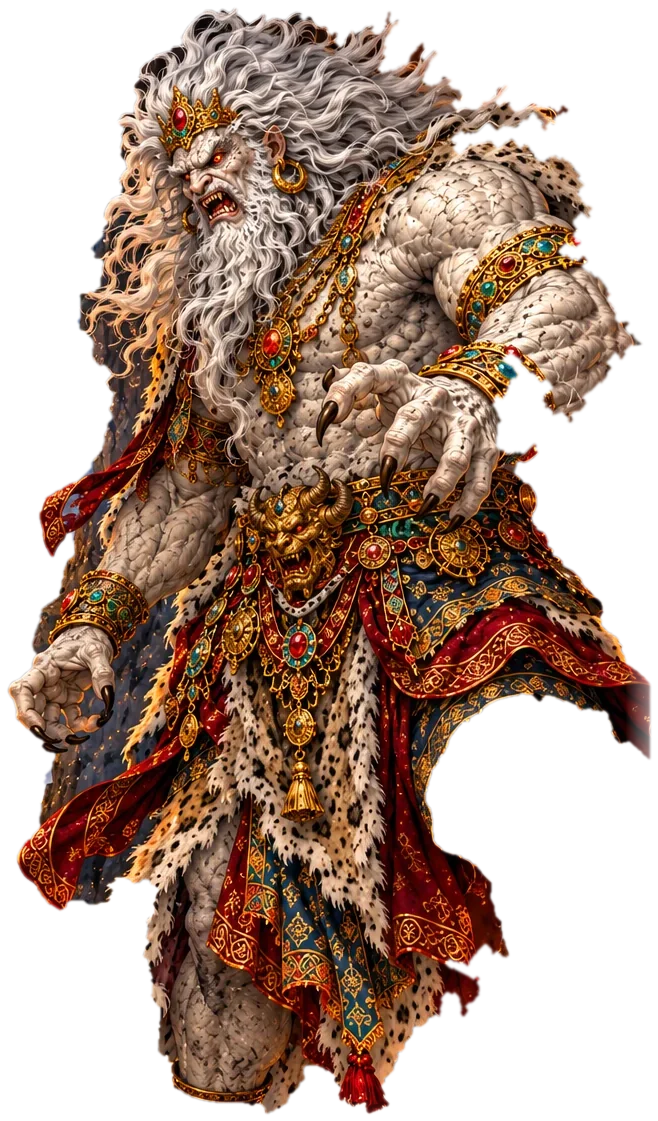
Inside, the cave was as black as the bottom of a well. Rostam rubbed his eyes until he could see, and there, filling the cavern like a mountain, lay the White Demon, asleep.
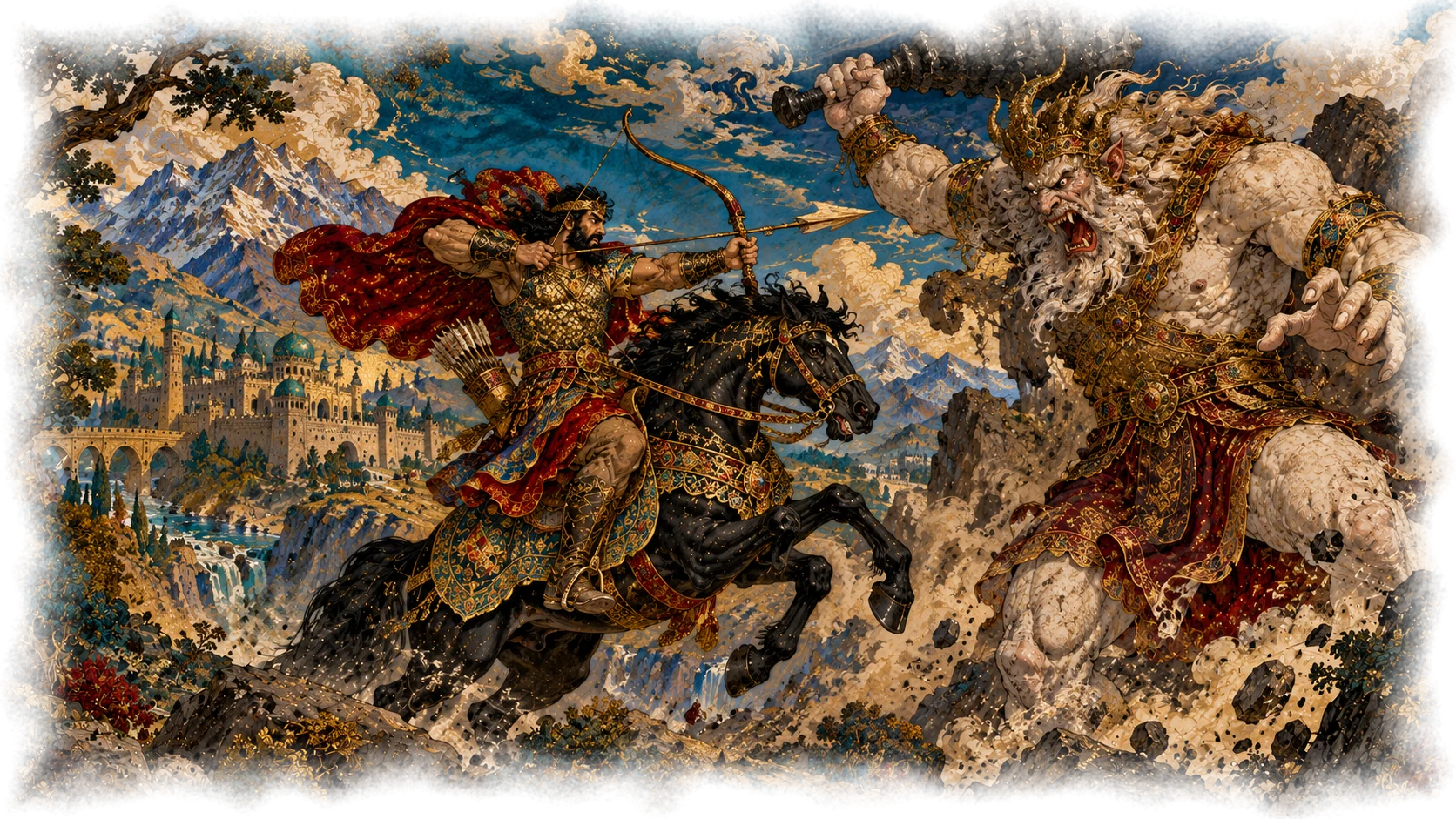
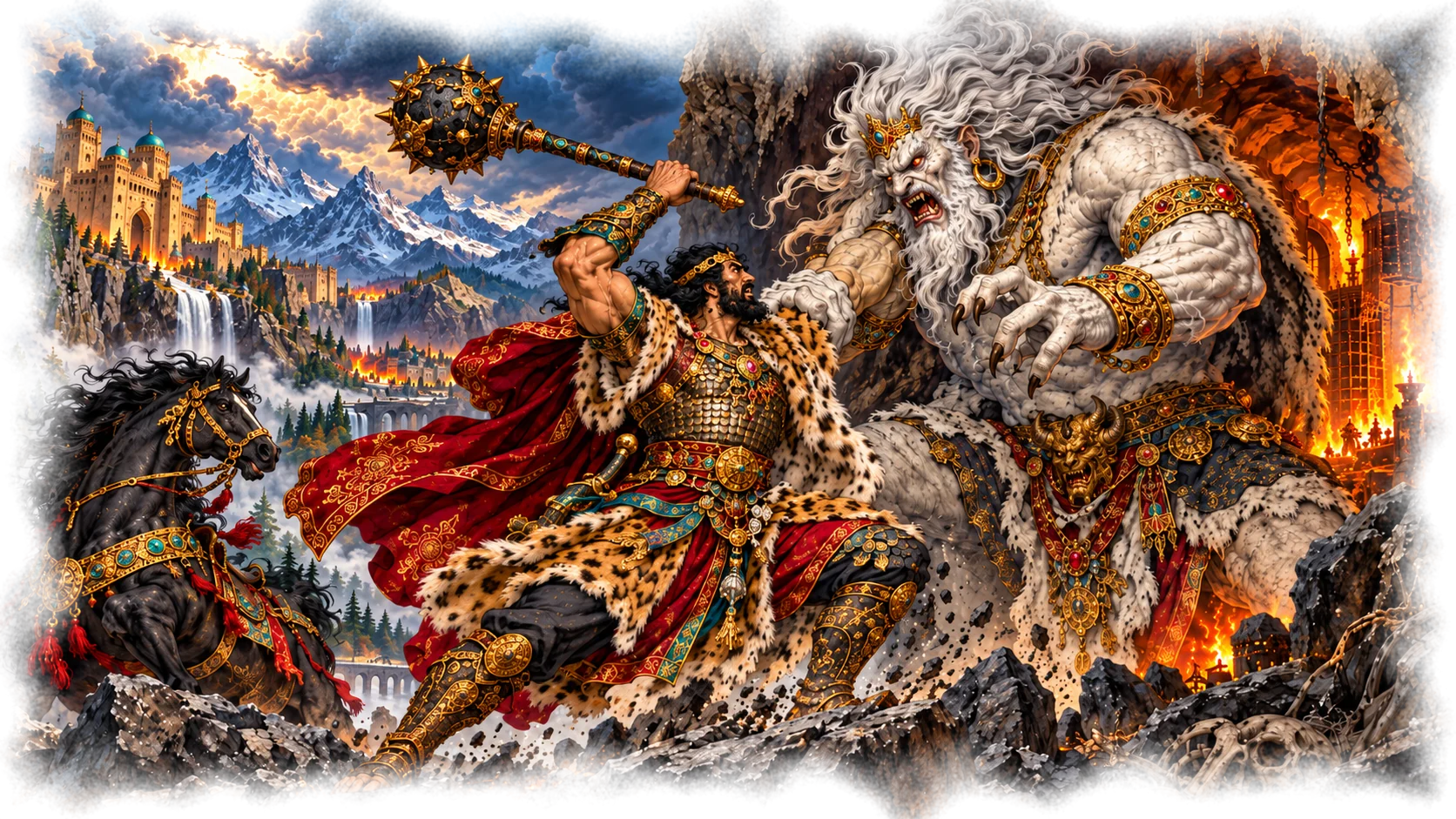
Rostam would not kill a sleeping enemy. He let out a roar like a leopard, and the White Demon woke. He rose with a millstone in his fist and came at him.
 V
VThe fight in the dark
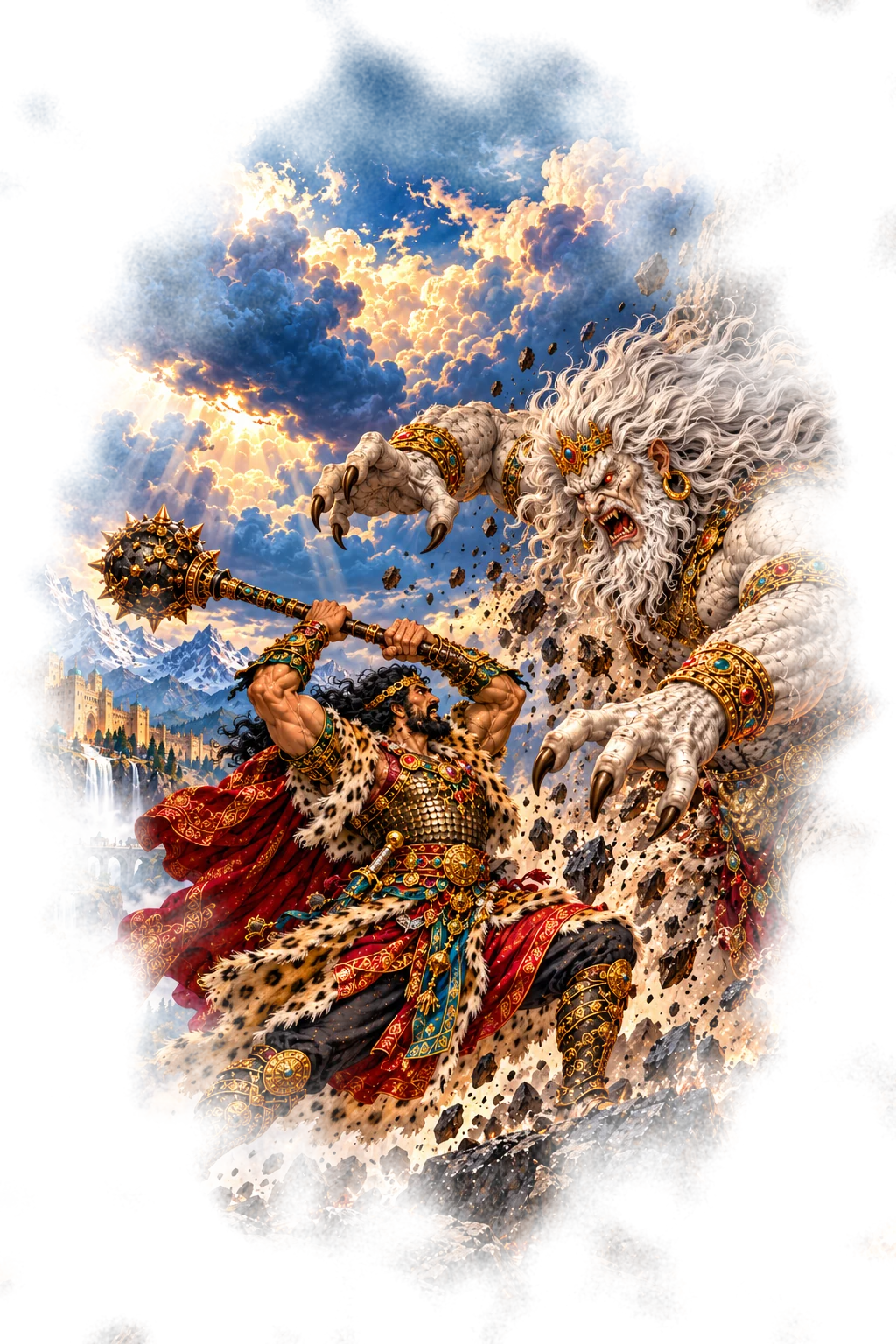
It was not a battle of armies, or even of weapons. It was two bodies in the dark. The White Demon was taller than the cave was wide, and as strong as the storm he had sent. Rostam struck first, and his sword took off one of the demon's legs, yet the White Demon still came on and caught hold of him.
They wrestled across the floor of the cave, tearing at each other, until the ground beneath them was mud. Rostam told himself that if he came through this day alive, he would live forever.
At last he lifted the White Demon above his head, as a lion lifts its prey, and threw him down. He drove his dagger into the demon's side and cut out his liver, for its blood was the only cure for the king's blindness.
Then the cave was silent. The demon who had brought darkness down on an army lay still, the size of a fallen hill.
He had not come for the demon's death. He had come for the light.
VIThe light returns
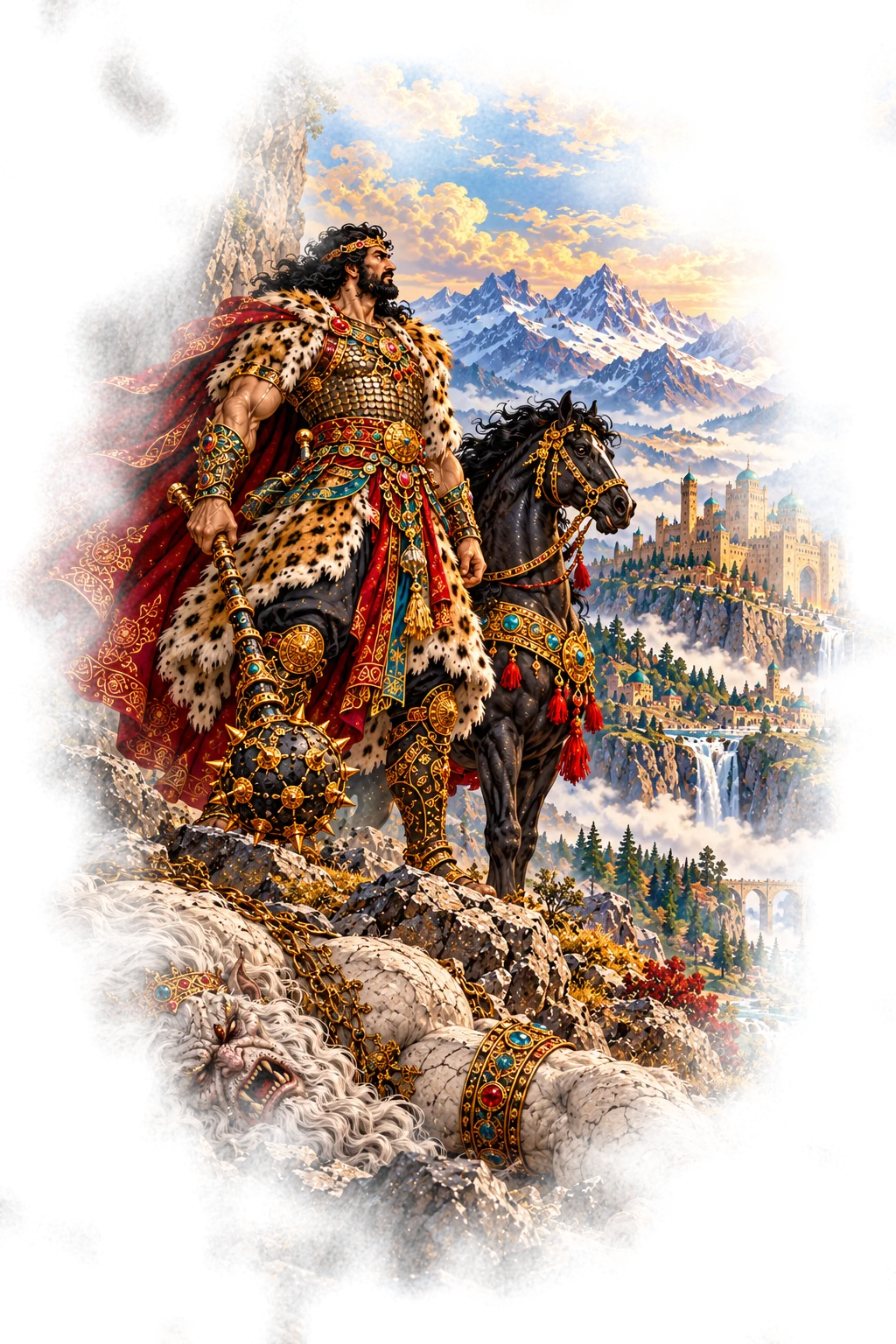
Rostam untied Olad and rode back to the place where Kay Kavus was held. He let the demon's blood fall into the king's eyes, and as it touched them, the darkness lifted. For the first time since the storm, Kavus could see.
Kavus embraced him and asked to hear everything: the lion and the desert, the dragon and the witch, Olad and Arzhang, and the cave beyond the seven mountains.
One by one his warriors were healed in the same way, and an army that had been blind and captive became an army again. With Rostam at their head they defeated the king of Mazandaran, and Olad, as Rostam had promised, was made its ruler.
Kay Kavus went home to Iran. He had gone looking for a paradise and found only darkness. He came back owing his sight to a man who had taken the hardest road to reach him.
VIIThrough the dark
The Seven Labours are among the best loved passages of the Shahnameh, and the fight in the cave is their summit. But killing the White Demon was never the point in itself. Rostam went into the dark to bring something back: the cure that would let others see.
He survived each trial through more than strength. He listened when Rakhsh warned him, prayed when he could not go on, saw through the witch's disguise, spared Olad and kept his word to him. Courage, cleverness and loyalty carried him as surely as his horse.
The hardest road was the only one that reached them in time.
That is why the story has lasted a thousand years. Every age has its own darkness, and every age needs someone willing to take the harder road through it.